Conference Proceedings Available!
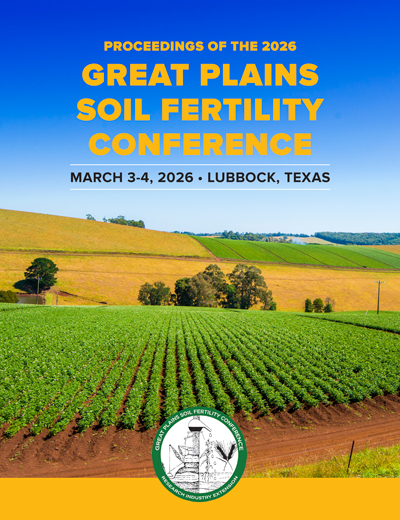
Proceedings
Authors
| Filter results15 paper(s) found. |
|---|
1. Observational and Modeling Methods to Inform Ecosystem Service MarketsInterest in quantifying the impacts of land management on ecosystem services has grown as governments, environmental organizations, and corporations have pledged to reduce greenhouse gas emissions, nutrient leaching, and other environmental impacts of human activities. Ecosystem service markets were formalized in the 1990s and originally deployed to mitigate point sources of air and water pollution. Associated protocols were fairly simple and easy to implement because quantification of point sources... S.J. Del Grosso, J. Delgado, D. Manter, C. Stewart, M. Vigil |
2. Experiences in the Canadian Prairies with Enhanced Efficiency N Fertilizers for Winter and Spring Wheat Production SystemsThis presentation summarizes several studies all designed to address knowledge gaps around enhanced efficiency urea fertilizer (EEF) efficacy for nitrogen (N) management in western Canadian winter and spring wheat production systems. Polymer-coated urea was first studied to determine how handling effects can alter the coating integrity of environmentally smart nitrogen (ESN®). While N release rates increased from retail or farm-handling such as transferring... B. Beres |
3. Nitrogen Management in Conservation Systems to Increase Use Efficiency and Cotton ProductionConservation management practices like no-tillage and cover crops have the potential to reduce wind erosion and stimulate ecosystem service, but lingering doubts regarding nutrient immobilization and water usage may limit their adoption on the Texas High Plains. A study was initiated at the Agricultural Complex for Advanced Research and Extension Systems (AG-CARES) in Lamesa, TX to examine the impact of supplemental nitrogen (N) fertilization on cotton yields and nitrogen use efficiency (NUE)... J. Burke, D. Kelley, K. Lewis |
4. Lentil Nitrogen Fixation Response to Fertilizer and Inoculant in the Northern Great PlainsLentil production in the semi-arid northern Great Plains has increased dramatically over the past two decades, providing agroecosystem benefits of efficient water use, pest cycle disruption, and biological nitrogen (N) fixation. Through N fixation, lentil may help alleviate soil acidification and groundwater contamination by reducing N fertilizer needs. Despite widespread farmer adoption of lentil in the region, little is known about the benefits of fertilizer or inoculant type concerning N fixation.... K. Baber, C. Jones, P. Miller, S. Koeshall |
5. Dramatic Soil Health Changes After 18 Years of Different Nitrogen Rates and Cropping Systems in the Northern Great PlainsRelatively few long-term cropping and nitrogen rates studies have been conducted in the semi-arid northern Great Plains that assess soil health changes. A cropping system study was initiated in 2002 in Bozeman, Montana (~400 mm annual precipitation) with wheat grown in even years, and either tilled fallow or one of the following no-till systems in odd years: fallow, wheat, pea grain, pea hay, pea green manure, and an alfalfa-grass (until 2012) followed by pea grain. N was applied at either 50%... C. Jones, P. Miller, C. Zabinski, W. Fouts |
6. Lentil Inoculant, Potassium, Sulfur, and Micronutrient Effects on Yield and Protein in the Northern Great PlainsLentil (Lens culinaris Medikus) is an important crop, averaging more than 600,000 ac in MT and ND from 2016-20. However, relatively little is known about inoculant and fertility response in lentil in the U.S. northern Great Plains. The objective of this experiment was to evaluate the effect of rhizobial inoculant formulations (granular and seed-coat) and nutrient additions (K, S, and micronutrients), on lentil growth, yield, and seed protein. This study was conducted at six or seven university... P. Miller, C. Jones, S. Atencio, C. Chen, E. Eriksmoen, S. Fordyce, P. Lamb, M. Ostlie, J. Rickertsen, M.A. Grusak, M. Bourgault, B. Franck, P. Carr, S. Koeshall, K. Baber |
7. Winter Wheat Response to Enchanced Efficiency Fertilizers in the Canadian PrairiesOptimal nitrogen (N) management can improve agronomic efficiency, and increase winter wheat (Triticum aestivum L.) grain yield and protein content. Two experiments were conducted to measure the responses of winter wheat to enhanced efficiency N fertilizers and timing/placements across the Canadian Prairies. Experiment 1 consisted of uncoated urea, urea+nitrification inhibitor (urea+eNtrench®), urea+urease and nitrification inhibitors (SuperU®), and polymer-coated urea (Environmentally... Z. Wang, J. Owens, X. Hao, L. Hall, K. Coles, C. Holzapfel, E. Rahmani, R. Karimi Dehkordi, B. Beres |
8. Soil Health and Cotton Production in the Semi-arid Texas High PlainsSoil health has become a ubiquitous term in agriculture, but little is known about the impact of cropping system management on soil health metrics in semi-arid regions because of the majority of research has been conducted in humid or sub-humid regions of the United States. As a leading commodity of the semi-arid Southwest, cotton is an ideal candidate for soil health review. The purpose of this study was to assess a proposed set of soil health metrics in cotton production on the semi-arid Texas... J. Burke, K. Lewis, P. Delaune |
9. Lime Management in the Semi-arid Regions of the USSoil acidity is increasing in the semi-arid regions of the US; however, questions exist about the efficacy of different liming products to raise soil pH and how long the lime benefits last. Therefore, we conducted two studies: 1) To monitor the efficacy of three liming products: sugarbeet lime (tilled and non-tilled), prilled lime (seed-placed), and aglime (tilled) to improve soil pH and crop yields at two sites in Montana and 2) To evaluate how different sugarbeet lime rates perform to mitigate... M. Rakkar, C. Jones, P. Miller, K. Mcvay, R. Engel |
10. Subsurface Drip Fertigation Impacts on Nutrient Uptake and Partitioning in CottonSubsurface drip irrigation (SDI) is becoming a popular option for maximizing the water use efficiency of cotton (Gossypium hirsutum), especially in semi-arid environments of the Midsouth and Western United States. In the Texas High Plains where underground water resources from the Ogallala Aquifer are rapidly declining, there is increased adoption of water conservation technologies like center pivot and drip irrigation. In addition to increased water efficiency, drip irrigation allows... H.L. Valencia, J. Burke, T. Bennett, K. Lewis |
11. Developing Nitrogen and Phosphorus Fertigation Strategies in CottonSubsurface drip irrigation (SDI) is becoming a popular option for maximizing the water use efficiency of cotton (Gossypium hirsutum), especially in semi-arid environments of the Midsouth and Western United States. In the Texas High Plains where underground water resources from the Ogallala Aquifer are rapidly declining, there is increased adoption of water conservation technologies like center pivot and drip irrigation. In addition to increased water efficiency, drip irrigation allows... K. Lewis, H. Valencia, T. Roberts, J. Burke, G. Ritchie |
12. Sustainable and Resilient Cropping Systems to Mitigate Wind Erosion for the Enhancement of Human HealthIn the Texas High Plains, regenerative cropping practices in a predominantly conventional farming area can be used to prevent further depletion of topsoil by wind erosion. This loss of topsoil can cause a decrease in agricultural productivity and form dust storms that can be detrimental to human health causing a rise in hospitalizations of chronic lung damage, cardiovascular disorders, and diseases contracted by inhalation. Using regenerative farming practices, both the number and size of dust... K. Lewis, R. Babcock, J. Burke, C. Cobos |
13. Assessment of Microalgae Amendments on Soil Nutrient Dynamics and Cotton Productivity Under Limited Irrigation in Texas High PlainsTexas High Plains (THP) is a major cotton producing region of Texas. However, declining soil fertility and increasing risk of crop yield penalties associated with extreme weather patterns and low organic input have raised concern in sustainability of farmlands in this region. Micro-algae amendment is relatively new and emerging farm practice in crop production which is getting attention due to its ability to stimulate soil health and enhance crop productivity. There are no prior records on microalgae... A. Kafle, K. Lewis, J. Burke, H. Nakabuye, M. Jonhson |
14. Evaluating the Profitability of Nitrogen Management Strategies to Increase Yield in Regenerative Cotton Production SystemsSoil health management practices, such as cover crops and no-till systems, are common in semi-arid cropping systems to reduce wind erosion. However, implementing these practices can also lower cotton yield. As a result, cotton production using no-till and cover crop systems in semi-arid environments tends to be less profitable than conventional systems, despite lower costs from fewer tillage operations during the growing season. For these soil health practices to be economically sustainable in... A. Wright, J. Burke, K. Lewis, W. Keeling, W. Keeling |
15. Nutrient Uptake Variability of Modern Cotton CultivarsCotton (Gossypium hirsutum) is one of the most economically important crops in Texas, generating more than $3B in annual revenue. Since the development of transgenic cotton cultivars in the early 2000s, cotton yield potential has increased. Despite these advances, little is known about the nutrient uptake and partitioning patterns of these different cultivars. The purpose of this study was to evaluate the nutrient uptake and partitioning patterns of five modern cotton cultivars grown under three... J. Burke, K. Lewis |