Conference Proceedings Available!
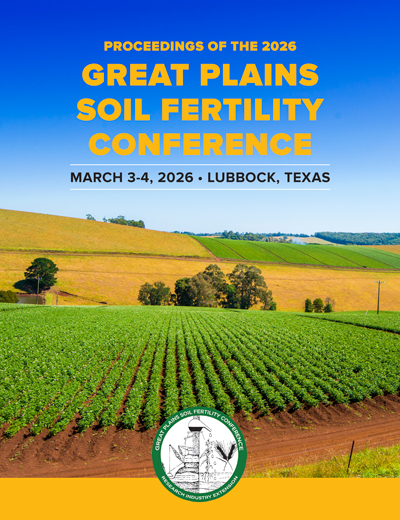
 
The 2026 Great Plains Soil Fertility Conference Proceedings Book is now available! Click the link below to view the full document!
 
2026_GPSFC_Proceedings.pdf

Proceedings

Find matching any: Reset
2022 Great Plains Soil Fertility Conference
2008 Great Plains Soil Fertility Conference
2024 Great Plains Soil Fertility Conference
2006 Great Plains Soil Fertility Conference
Add filter to result:
Authors
Abdelhamid, M
Abunyewa, A
Acosta-Martinez, V
Adamson, D
Ahuja, L
Aiken, R
Akin, S
Akin, S.G
Allen, B
Allison, E
Alvarez-Pugliese, C
Alwang, J
Anderson, S.H
Anderson, S.M
Archer, D
Archibequet, S
Arnall, B
Ascough II, J
Ashley, R
Assefa, Y.M
Atencio, S
Aula, L
Baath, G
Babcock, R
Baber, K
Bainard, L
Baltensperger, D
Barnard, D.M
Bartolo, M
Bauder, S
Bauder, T
Baughman, T
Bausch, W
Bawa, A
Bean, B
Beck, D
Bell, J
Benajmin, J
Benjamin, J
Benning, J
Beres, B
Berrada, A
Bevers, S
Bicaldo, J
Bigatao Souza, J
Blaylock, A
Bly, A
Boogades, N
Borch, T
Bordovsky, J
Botte, G.G
Bourgault, M
Bourns, M
Bradbury, G
Brandt, A.D
Brandt, S
Brian, O
Brobst, R
Brockmueller, B
Bronson, K
Brown, R
Brummer, J
Buetow, R
Bullock, P
Bumguardner, A
Burgener, P
Burke, J
Burke, J.A
Cade-Menun, B
Calderon, F
Calderón, F
Cardon, G.E
Carlson, K
Carr, P
Carson, Z
Chatterjee, S
Chen, C
Claassen, M
Clark, J
Cobos, C
Coffin, K
Cole, D.L
Coles, K
Correira, A
Corwin Doesken, K
Coyle, K
Creech, C
D'Adamo, R
Daly, E
Davis, J
DeLaune, P
DeSilva, S
Del Grosso, S
Delgado, J
Delgado, J.A
Demarco, J
Derner, J
Derrick, J
Detter, N
Dhuyvetter, K
Dobermann, A
Doesken, K
Dumler, T
ETEMADI, F
Easterly, A
Elliott, A
Elliott, J
Ellman-Stortz, L.M
Enciso, J
Endres, G
Engel, R
Engle, T
Eriksmoen, E
Etesami, M
Evans, B
Evans, R
Falk, J
Ferguson, R
Finch, B
Fixen, P
Flore, N
Floyd, B
Flynn, R
Fordyce, S
Foster, J
Foster, J.L
Fouts, W
Francis, D
Franck, B
Franck, S
Franzen, D
Garcia Helguera, P
Geary, B.T
Gelderman, R
Gentry, T
Ghimire, D
Gill, R
Giordano, N
Godin, R
Godsey, C
Goettl, B
Goos, J
Gordon, B
Gordon, W
Grant, R
Green, C
Griffith, D
Gross, T
Grunberg, J
Grusak, M.A
Guo, W
Guttieri, M
Haag, L
Haby, V
Haderlie, A
Hall, L
Halvorson, A
Hansen, N
Hansen, N.C
Hanson, J
Hao, X
Harapiak, J
Harold, J
Harold, S
Harrold, S
Hatfield, J
Hays, K
Heard, J
Heer, W
Helseth, C
Henry, B
Hergert, G
Herman, J
Hernandez-Ramirez, G
Holman, J
Holman, J.D
Holzapfel, C
Hopkins, B
Hopkins, B.G
Hughes, H
Inman, D
Ioannou, J.D
Ireland, S
Irvine, R
Iversen, B
Iversen, W
Jabro, J
Jackson, G
Jacobs, J
Jaenich, B.R
James, D
Janssen, K
Jifon, J
Jin, V.L
Johnson, B
Johnson, D
Johnson, S.K
Johnston, A
Jones, C
Karamanos, R
Karimi Dehkordi, R
Karlen, D
Karn, R
Kastens, T
Keeling, W
Kennedy, W
Khosla, R
Kim, J
Kim, K
Kim, S
Kitchen, N.R
Klein, B
Klimchuk, K
Koerner, P
Koeshall, S
Kovar, J
Kowatch-Carlson, C
Krupinsky, J
Kumar, S
Lafond, G
Lamb, P
Lambert, A.M
Lawley, J.R
Lawson, V
Lehman, R.M
Leikam, D
Leikam, K
Lenssen, A
Leonard, A
Lester, G
Lewis, K
Lewis, K.L
Liebig, M
Liebig, M.A
Lim, C
Loecker, J
Lollato, R
Lollato, R.P
Long, D
Lovewell, H
Lu, C
Lukach, J
Lundgren, J
Lyon, D
Maatougui, M
Maddox, L
Maddux, L
Maeda, M
Maharjan, B
Malapati, A
Malinowski, D
Mankin, K.R
Manter, D.K
Marcillac, N
Martin, G
Martin, K
Martin, V
Mason, S
Massey, J
Massey, M
Mauler, P
May, W
McDonald, M
McKay, K
McMaine, J
McVay, K
Mengel, D
Menkhaus, D
Merrill, S
Mikha, M
Mikha, M.M
Miller, P
Miller, R
Miner, G.L
Mitchell, R.B
Moore, E
Moore, J
Morinigo, P
Morrison, M
Moshia, M
Mosier, A
Moulay, H
Multer, W
Nelson, J
Nelson, N
Nielsen, D
Nielsen, R
Noland, R
Norton, J
Norton, J.B
Norton, U
Obour, A
Obour, A.K
Olson, B
Osborne, S
Ostlie, M
Owens, J
Pabuayon, I
Patel, S
Pearson, R
Peterson, G
Pham, T
Phillips, S
Pikul Jr., J
Pinchak, W
Porter, D
Poss, D
Powers, B
Presley, D
Pritchett, J
Quarles, D
Rahmani, E
Rakkar, M
Ransom, C.R
Raun, W.R
Reich, R
Reicks, G
Reule, C
Rickertsen, J
Riedell, W
Ritchie, G
Riveland, N
Roa, G
Roberts, D
Roberts, T
Robinson, D
Rodgers, H
Rohde, J
Roozeboom, K
Roozeboom, K.L
Roper, W
Rops, B
Rosa, A
Ruiz Diaz, D
Rutter, B
Ryan, L.P
Sadras, V
Sainju, U
Saldana Haworth, I
Santos, E
Sawatzky, S
Schepers, J
Schierer, R
Schipanski, M.E
Schlegel, A
Schmer, M.R
Schmidt, E
Schneekloth, J
Schoenau, J
Schultz, K
Schwartz, R
Seely, C.J
Selles, F
Sexton, P
Seymour, D
Shanahan, J
Shanklin, L
Shapiro, C
Sharma, A
Sharry, R
Sharry, R.L
Sheffield, R
Sherrod, L
Siebecker, M
Sij, J
Simao, L
Simon, L
Simon, L.M
Singh, M
Singh, R
Skalsky, S
Slaughter, L
Smith, M
Solari, F
Souza, J
Stapley, S.H
Stevens, B
Stevens, W
Stewart, C.E
Stewart, W
Stichler, C
Stonaker, F
Stone, L
Stromberger, M
Svedin, J.D
Taber, H
Tamea, P
Tanaka, D
Tarkalson, D
Thomas, M
Thompson, C
Tindall, T
Tomlinson, P
Truman, C
Tucker, D
Valencia, H
Valliant, J
Van Wychen, S
Vargas, K
Veum, K.S
Vigil, M
Villacis, A
Vocasek, F
Volkman, M.M
Waddell, J
Walters, D
Wang, Z
Waskom, R
Weber, C
Weiseth, B
Westfall, D
Wick, A
Wienhold, B
Wilhelm, W
Williams, C
Woodard, H
Woolley, E.A
Wortmann, C
Yabaji, R
Yost, M.A
Zabinski, C
Zimbrunnen, J
van Diepen, L.T
Topics
General Posters
Environment and Soil
Nitrogen Management
Conservation Impacts on Soil Health
Nutrient Management and Analysis
Student
General
Type
Oral
Poster
Year
2006
2008
2022
2024
Home » Conference » Results

Conference

Filter results200 paper(s) found.

1. A Comparison of Dryland Grasspea (Lathyrus sativus L.) and Admiral Pea (Pisum sativum L.) Grown Under Different Row Spacings

Grasspea (GP) is a drought-tolerant legume grown for forage and grain in Europe and the Middle East.  It has potential value to be used as a nitrogen-fixing crop in rotation with common grain crops in the High Plains. However, the agronomics of GP for our region have not been investigated to date. We carried out a field experiment to compare the growth of GP and Admiral Pea (AP) in 76 cm rows vs. 19 cm rows. The growth, yield, grain N content, phenology, and water utilization was me... F. Calderon, M. Vigil, D. Nielsen, J. Benjamin, M. Mikha

2. A Historical Yield Performance in Western Kansas

A primary objective in Agronomy is to increase crop yields through improved varieties/hybrids and production practices. Crop variety/hybrid performance tests of irrigated corn, irrigated wheat, dryland wheat, irrigated grain sorghum, dryland grain sorghum, and irrigated soybeans were conducted at the Southwest Research Extension center in Garden City, Kansas annually over the last 50 years. For each crop, the varieties/hybrids yields were averaged for each year from 1956 through 2006. These t... J. Holman, C. Thompson, A. Schlegel

3. A New Hydroponic System for Testing Mineral Nutrient Deficiencies and It's Application to Soybeans

Correlating plant tissue nutrient concentrations with visual symptoms is valuable in combating mineral nutrient deficiencies and toxicities. Due to changing climates and decreasing water supplies throughout the world, agricultural lands need to improve nutrient and water management in crops, including soybeans (Glycine max L.).Because nutrient concentrations can be easily controlled, hydroponics effectively demonstrate isolated specific nutrient related symptoms. However, many h... A.M. Lambert, S.M. Anderson, D.L. Cole, A. Haderlie, C.J. Seely, B.G. Hopkins

4. A Use of Skip-row Planting As a Strategy for Drought Mitigation in the West Central Great Plains

Skip-row planting of corn and sorghum has recently developed as a strategy for mitigating drought in the dryland regions of the western Central Great Plains. Here we compare 16 site-years of no-till feed grain yields when planted skip-row and when planted conventionally in Eastern Colorado and Western Kansas (over half of the locations were on farm replicated trials. The idea is that a wider row arrangement forces a change in the timing of soil-water availability and use, which may mitigate d... M. Vigil, B. Henry, F. Calderón, D. Poss, D. Nielsen, J. Benajmin, B. Klein

5. Accounting for Nitrogen from Often Overlooked Sources

Improving nitrogen use efficiency has long been a goal of both researchers and producers. With increasing interest and adoption of regenerative agricultural practices, fertility strategies can change from traditional methods. However, changes in strategies are often not considered when adopting new practices. The goal of this presentation is to discuss potential sources of nitrogen that are often overlooked when developing nitrogen management strategies. For example, legume cover crops or rot... P. Delaune

6. Accuracy of Quick Soil Nitrate Tests in Montana

Accurate, rapid testing of soil nitrate-N would allow producers to adjust their fertilizer rates when needed and augment their annual soil testing. This study tested the accuracy of three quick test kits on approximately 90 soils. Quick nitrate-N readings were well correlated (P<0.001) with laboratory readings. However there was a fairly high probability (~40%) of over or under estimating total soil N by at least 15 lb N/ac. In addition, regression coefficients between quick test and labor... E. Allison, C. Jones

7. Achieving Economic and Greenhouse Gas Goals Through Tillage and N Management

A field study was conducted near Ft. Collins, CO evaluating irrigated continuous corn production under conventional tillage (CT) and no-till (NT) with six N fertilizer application rate treatments. Economic return response functions were developed for each tillage system and combined with net global warming potential estimates for a subset of treatments to determine whether economic and greenhouse gas emission improvements could be achieved. Results show economic returns can be increased by $1... D. Archer, A. Halvorson

8. Acid Soil Adaptation Management in Western North Dakota with Hard Red Spring Wheat

Hard Red Spring Wheat (HRSW) yields are decreasing due to acidic soils. No-till practices paired with heavy N use have lowered the soil pH on many acres of the Northern Great Plains. Acid soil where the pH drops below 5.5 has an impact on nutrient availability, soil microbial activity, stunted roots from aluminum (Al) toxicity and other plant/soil interactions. These areas can be improved from surface liming; however, liming can be costly. For many producers facing this issue, especially thos... R. Buetow

9. Acid, Chlorine, Nitrogen, and Phosphorus Management for Subsurface Drip Irrigation Systems

Subsurface drip irrigation (SDI) is expanding at a rapid rate in the western U.S.  The efficiency of this irrigation system is higher than with center-pivots. Chemical maintenance, i.e. continuous acidification and periodic chlorination is required to prevent clogging of emitters by precipitates of calcium carbonate, iron or manganese salts, and from bacterial wastes. Fertigation with nitrogen (N) and phosphorus (P) fertilizers is discussed, and current fertigation research in SDI i... K. Bronson, R. Yabaji, W. Multer, C. Stichler, J. Enciso, J. Bordovsky, D. Porter, C. Green

10. Acidification of Alkaline Irrigation Water: Effects on Nutrient Availability, Yield and Quality of Sweetcorn on Alkaline Soils

More than 9,000 acres of sweet corn are grown each year in western Colorado with a farm-gate value of approximately $16 million.  Over the past decade growers and extension agents have noticed a steady increase in soil pH along with an increase in micronutrient deficiencies.  Preliminary soil tests on this calcareous soil showed pH ranging from 7.5 to 8.0. Irrigation water pH is high and increases through the season.  In early June irrigation water pH is nea... R. Godin, J. Harold, K. Schultz, J. Rohde

11. Active Remote Sensing for In-season Precision N Management

Uniform nitrogen (N) fertilizer applications across entire fields have been shown to be inefficient. Recent advances in agricultural technology have led to the development of active remote sensing equipment that can be used to detect crop biomass and potentially be used to improve N fertilizer application rates. The objective of this study was to evaluate the effectiveness of using a hand-held active remote sensing instrument to estimate yield potential in irrigated corn. This study was condu... D. Inman, R. Khosla, R. Reich, D. Westfall

12. Adjusting N Rate is the First Step in N Management Intensification

Nitrogen (N) management and sowing date are among the leading causes for winter wheat (Triticum aestivum L.) yield gap in Kansas. This research aimed to compare the two most common cropping sequences in Kansas (continuous wheat [Ct-Wt] and double-cropping of winter wheat and soybean (Glycine max (L.) Merrill) [Wt-Sy]) under two N management (standard and progressive) on wheat production. Standard N management consisted of one single broadcast N application as UAN at 80 lbs ac-1... L. Simao, R. Lollato, D. Ruiz diaz

13. Advancements in Nitrogen and Potassium Fertilizer Recommendations in North Dakota Over the Past 30 Years

Beginning my career at NDSU as Extension Soil Specialist June 13, 1994, I inherited the obligation of periodically revisiting crop nutrient recommendations and determining whether adjustments were needed. The state of the state in 1994 was composite soil sampling, a dominantly wheat-based cropping system, and yield-goal-based fertilizer recommendations. First addressing site-specific soil sampling, I was surprised to find that zone soil sampling was an excellent predictor of residual nitrate ... D. Franzen

14. Advances in Slow-release Nitrogen Fertilizers

Controlled- and slow-release nitrogen (N) fertilizers have been commonly used in high-value applications, such as horticultural production.  Traditional controlled-release products have not been economical for use in major grain crops because of high cost and low crop prices.  New economical, controlled-release fertilizers are available for use in field crops such as corn (Zea mays L.), wheat (Triticum aestivum L.), potato (Solanum tuberosum L.) and oth... A. Blaylock, T. Tindall

15. Advancing Precision Nitrogen Management in Agriculture: a Multifaceted Approach

Advancing precision nitrogen management in agriculture involves achieving a balance between maximizing crop yield and minimizing environmental impact. Traditional nitrogen management approaches often lead to inefficiencies, contributing to environmental issues such as nitrous oxide emissions and nitrogen runoff. Significant challenges persist in quantifying factors influencing nitrogen dynamics in the soil-plant-atmosphere system, including landscape positions, soil properties, weather patter... W. Guo, R. Karn, K. Lewis

16. Agriculture’s Contribution to Nitrogen Deposition in Rocky Mountain National Park

Nitrogen deposition in Rocky Mountain National Park has been increasing steadily and is impacting both terrestrial and aquatic ecosystems.  Ammonia volatilization from fertilizer is estimated to contribute 20% of the N deposited in the park.  The objectives of our research are 1) to determine N isotope ratios for ammonia sources, and to use this tool to evaluate the accuracy of the source predictions, and 2) to evaluate Best Management Practices for ammonia volatilization ... J. Davis, T. Borch, N. Marcillac

17. Agronomic Evaluation of Camelina Genotypes Selected for Yield, Oil Concentration, and NUE

In recent years, camelina (Camelina sativa L.) has received global recognition for its role as a biofuel crop and multipurpose addition to cereal-based farming systems in the Northern Great Plains (NGP). The present study objected to investigative the response of selected camelina cultivars, line 229, line 35, line 53, Suneson, and Check1 to nitrogen (N) and sulfur (S) inputs in terms of biomass, yield, seed oil content, and nitrogen use efficiency (NUE) at five nitrogen (N) rates, r... M. Etesami, C. Chen, B. Franck, S. Franck, C. Lu

18. Agronomic Implications of Dairy Effluent Water Reuse

New Mexico dairies generate a waste-water stream that is often used for land application.  The water contains nitrogen that must be applied according to statutory limits or can be based on agronomic considerations.  However, the effluent water also contains other nutrients as well as salinity components that may have a greater impact on crop production and environmental sustainability.  A survey of New Mexico dairy lagoons was done in the fall of 2003 in order to... R. Flynn

19. Analysis of 10 Years of N Rate and Timing Work in Oklahoma Winter Wheat

This study was conducted to determine optimum top-dress nitrogen fertilizer rate by location and environment so it may be reproduced in following years. Winter wheat was planted in different locations each year starting in 2009. Each location had a treatment structure consisting of Preplant nitrogen rates ranging from 28.02kg/ac to 224.17kg/ac and top-dress nitrogen rates ranging from 28.02kg/ac to 140.11kg/ac. When top-dressing occurred there was two plots that had sensor based rates that us... S.G. Akin, B. Arnall

20. Analysis of 13 Years of Nitrogen Rate and Timing Work in Oklahoma Winter Wheat

In 1999, Raun and Johnson estimated that the worlds nitrogen use efficiency (NUE) in cereal grains was 33%. After two decades of improvement (Omara et al, 2019) revised the prior world NUE for cereal grains to 35%. This improvement can be partially attributed to the change in producer practices of timing of nitrogen applications from an all pre-plant application to a split application of both pre-pant and in-season. The experiment that is analyzed within this study was established in 2009 wit... S. Akin, B. Arnall

21. Antibiotic Transport Via Runoff and Soil Loss from Manured Fields

Previous research has verified the occurrence of veterinary antibiotics in manure, agricultural fields, and surface water bodies, yet little research has evaluated transport of antibiotics from agricultural fields.  The objective of this project is to quantify the transportability of veterinary antibiotics from agricultural fields where manure or effluent is applied.  Our hypothesis was that there would be significant differences among antibiotics in the partitioning ... J. Davis, C. Truman, S. Kim, J. Ascough ii, K. Carlson

22. Apparent Electrical Conductivity As a Tool for Delineating Spatial Patterns in Inherent Soil Properties

Soil properties affecting crop yield exhibit spatial variability. Apparent electrical conductivity (ECa) can be economically measured and is well correlated with many soil properties. Methods for processing ECa survey data and determining the relationship between ECa and soil properties are needed. An ECa survey was conducted on two fields and processed using the ESAP computer program. Soil samples to calibrate and validate the program were collected. An initial assessment resulted in a succe... B. Wienhold, P. Koerner

23. Assessing Corn Response to Cover Crops and Nitrogen Fertilization in a No –Till, Three-year Rotation in Northeast Kansas

As industry initiatives and government programs begin funding and incentivizing climate-smart agricultural practices, more farmers in the great plains region may be interested in incorporating cover crops into their rotations. Annual yield data can aid in understanding how cover crops impact cash crop productivity in this region. A long-term cover crop experiment in northeast Kansas was established in 2007 based on a wheat – corn – soybean rotation to determinate th... A. Correira, J. Grunberg, P. Tomlinson, K. Roozeboom, D. Presley

24. Benefits of Fertilization to Beef Production from Forage Wheat

Wheat (Triticum aestivum L. em. Thell) production in the southern Great Plains is a unique enterprise that provides both high quality forage and a grain crop within the same growing season.  However, information on nitrogen and phosphorous management programs to maximize forage and beef production in a winter-active, dual-use wheat production system is lacking.  Field-scale production studies were initiated on a Tillman clay loam near Vernon, TX in 1999 to determine i... J. Sij, W. Pinchak, S. Bevers, D. Malinowski, R. Gill, T. Baughman, D. Robinson

25. Biofuels and Nutrient Management

Few developments have had as dramatic or rapid an impact on crop production as did grain-based ethanol on corn in 2006 and 2007. In response to strong market signals, corn acreage in the U.S. in 2007 jumped from a three-year average of 80 million acres to nearly 93 million, an increase of more than 15%. Secondary effects on prices of other commodities soon followed. Nutrient demand increased as well as the cost of many inputs needed for crop production. The purpose of this paper is to evaluat... P. Fixen

26. Calibration of the Nitrate Soil Test for Malting Barley in Western North Dakota

Malting barley production is moving westward into semi-arid regions, such as western North Dakota.   The objective of this study was to determine if the “nitrogen factor” traditionally used for malting barley in eastern ND, 1.5 lb (soil nitrate + fertilizer)-N per bushel, was valid for western ND.  Six experiments were conducted.  At each site, twenty unique combinations of residual nitrate-N and fertilizer N were combined with two varieties, a 6... J. Goos, B. Johnson, E. Eriksmoen, J. Nelson, G. Martin, P. Carr, N. Riveland, G. Bradbury

27. Can Existing Sensor-based Technologies Predict Spring Wheat Yield and Protein

Sensor-based technologies for in-season application of nitrogen (N) to winter wheat (Triticum aestivum L.) have been developed and are in use in the southern Great Plains.  There is little information about the suitability of this technology for spring wheat production in the northern Great Plains.  Field experiments were established in Brookings and Gettysburg, SD to evaluate the GreenSeeker Hand Held optical sensor (NTech Industries, Ukiah, CA) for measuring in-seas... S. Osborne, R. Gelderman, D. Beck

28. Can Soil Health Metrics Improve Standard Soil Fertility Recommendations?

It is commonly speculated that integrating soil health (SH) testing with soil fertility (SF) testing would improve fertilizer recommendation decisions. However, quantified impacts of SH properties, specifically soil biological properties, on fertilizer demand have not been well established. The objective of this research was to explore corn (Zea mays L.) yield response to phosphorus (P) and potassium (K) fertilization as influenced by established SF analysis and common SH me... N.R. Kitchen, J.D. Svedin, S.H. Anderson, K.S. Veum, C.R. Ransom

29. Carbon and Nitrogen Cycling in High-Elevation Hay Meadows: Understanding Processes for Improved Agroecosystem Productivity

Irrigated hay meadows are an integral, but often under-performing component of livestock operations in western rangeland ecosystems. Flood irrigation resulting in seasonal saturation, high elevation, and cool temperatures common to these systems result in concentration of organic materials near the soil surface, constraining nitrogen cycling, forage productivity and diversity. Improved understanding of nutrient cycling, soil organic matter processes, and ecosystem services of irrigated hay me... D. Adamson, J. Norton

30. Carbon and Nutrient Dynamics in Regenerative Cotton Production Systems of the Texas Southern High Plains

Carbon (C) sequestration in soil provides environmental and agronomic benefits. However, building soil C in semi-arid cotton systems is difficult due to low rainfall, low biomass production and high temperatures. Regenerative systems, which utilize practices such as cover cropping and crop rotation, can increase the amount of C input in cotton (Gossypium hirsutum) production systems, but they may increase C losses via carbon dioxide (CO2) due to increased respiration from soil... N. Boogades, K. Lewis, C. Cobos, J. Burke, P. Delaune

31. Changes in Extractable Phosphorus in Amended Soils During a Growing Season

Recent studies indicate that soil extractable P and P in runoff are greatest immediately after fertilizer and manure applications. Our objective was to evaluate changes in Mehlich 3– and water– extractable P in soils amended with cattle (Bos taurus) manure and monoammonium phosphate (MAP) throughout a single growing season. Cattle manure and MAP were applied at a rate of 184 and 300 kg P ha-1, respectively, on a Pullman clay loam (Fine, mixed, superactive, thermic Torrertic Paleus... R. Schwartz, J. Bell

32. Combined Nitrogen with Magnesium or Zinc Effects on Sugarbeet Yield Sucrose Concentration, and Nutrient Uptake Under Conventional and No-till Systems

Sugar beet (Beta vulgaris L.) is an important cash crop in the Lower Yellowstone River valley. Fertility, especially nitrogen (N) fertilizer, management is critical for sugar beet yield and sucrose concentration.  While farmers are switching from a conventional tillage method to a no-till system for sugar beet cultivation, nitrogen (N) fertilizer application timing might need to be adjusted. Furthermore, micronutrients may enhance sugar beet yield and sucrose concentration. A tw... C. Chen, M. Etesami, M. Abdelhamid

33. Comparative Analysis of Different On-the-Go Soil Sensor Systems

This study is part of the field of precision agriculture. This management mode is one of the great revolutions in the agriculture field, and it means better management of farm inputs such as fertilizers, herbicides, and seeds by applying the right amount at the right place and at the right time. Precision agriculture aims to divide the farm into management plots where each receives customized management input based on soil fertility status, landscape position, and management. also p... H. Moulay, B. Arnall, S. Phillips

34. Comparative Analysis of Resource Partitioning and Nutrient Uptake Efficiencies in Modern Cotton Cultivars

Understanding the complex process of resource partitioning within the plant provides prospects to develop new crop improvement strategies for varying environmental factors and agronomic practices. In upland cotton, the partitioning of dry matter is as crucially important as that of macronutrients and micronutrients in improving productivity. This presentation highlights research works pertaining to the changes in macronutrient and micronutrient uptake and partitioning alongside the remar... I. Pabuayon, K. Lewis, G. Ritchie

35. Composted Manure Impacts on Organic Wheat Production in the Northern Great Plains

Montana leads the nation in organic production of small-grain crops including wheat (Triticum spp.). A major challenge faced by dryland farmers when growing wheat organically is supplying adequate N for optimum wheat yield and quality. A onetime application of composted manure at four rates (0, 5.6, 11, and 22 tons/acre) vs. annual applications of urea based on soil test results when growing wheat in wheat/fallow and wheat + biennial sweetclover [(Melilotus officinalis&... P. Carr, M.M. Volkman

36. Composting Problem Wastes Produced on the Csu Campus for Later Beneficial Campus Uses

Colorado State University’s (CSU) Diagnostic Laboratory (DL), located at the Veterinary Teaching Hospital, diagnoses the causes of animal mortality.  Some of the carcasses received by the DL contain prions, the infectious agents of Transmissible Spongiform Encephalopathies (TSEs.). The DL disposes of its mortalities in an alkaline digester, which destroys the infectivity of pathological organisms, including prions, after six hours.  The end products of the digestion ... K. Corwin doesken, J. Davis, B. Powers

37. Copper and Zinc Fertilization in Winter Wheat

Copper and zinc applications have recently been sited as a possible management practice to improve wheat production on the Great Plains.  Copper deficiency has been observed on wheat planted into peat soils, whereas wheat sensitivity to zinc deficiency is rated as low.  To determine whether winter wheat in Kansas may benefit from copper and zinc, a multi-site study was set-up to determine if a 1 lb/a application applied prior to jointing is beneficial to yield.  ... B. Olson, K. Leikam, M. Claassen

38. Correlation of Bray, Olsen and Mehlich 3 Soil Tests with Corn Grain Yield

In the past, the Bray P1 soil test was the most common extractant used to assess the soils relative ability to supply P to growing crops in much of the eastern Great Plains and Midwest. The Olsen P soil test is often used in much of the western Great Plains. In recent years, several states/laboratories, including Kansas State University, have adopted the Mehlich 3 extractant for routine use. The ability to extract multiple elements with a single extractant and its reported utility on bot... D. Leikam, J. Herman, J. Massey, A. Schlegel, L. Maddux, S. Harold

39. Cover Crop Termination Timing Effects on Soil and Cotton Nutrient Availability

Cover crop termination timings can have large impacts on the amount of soil coverage, nutrient availability, and stored soil moisture in a system. Producers in semi-arid regions must gamble the possibility of increased soil infiltration and reduced soil water evaporation against the potential of decreased soil moisture; in the SHP, success is dependent on irrigation capacity and precipitation. Optimizing termination timings for semi-arid regions and in deficit-irrigation/dryland systems is cr... C. Cobos, G. Baath, J. Burke, S. Chatterjee, P. Delaune, K. Lewis

40. Cover Crops in Certified Organic, Specialty Crop Food Production

There is a growing interest in certified organic, specialty crop food production. With a larger population demanding organic products and organic products offering a higher premium for the producer, farmers are exploring the transition to organic farming. Organic producers in southeastern Wyoming face multiple challenges in environments with high elevation, low precipitation, and have a short growing season. These challenges include management of persistent weeds, maintaining biodiversity, an... E. Moore, U. Norton

41. Cover Crops in Semi-arid Dryland Winter Wheat (Triticum Aestivum, L.) Fallow Rotation, a Farmer Collaboration Study

Winter wheat (Triticum aestivum, L.) (WW) is a primary dryland crop in semi-arid southeastern Wyoming. Incorporating cover crops (CC) to a WW-fallow rotation can help improve soil health. Local producers have been exploring the possibilities of using CC, but little is known about the CC impacts on soil moisture, plant available nitrogen (N) and competition with weeds in this region. A collaborative study with two dryland organic WW producers was launched in 2020. FARM 1 was planted to a CC mi... E. Moore, U. Norton

42. Crop Production and Soil Property Impacts of Integrating Annual Forages and Ruminant Livestock into Wheat-based Cropping Systems

Intensifying dryland cropping systems with annual forages and integrating ruminant livestock have the potential to increase profitability, increase water use efficiency, and improve soil health. The objective of this study was to determine the crop yield and soil property impacts of intensifying the traditional no-till winter wheat (Triticum aestivum L.)-grain sorghum (Sorghum bicolor Moench)-fallow (W-GS-F) cropping system with annual forages as well as integrating ruminant... Z. Carson, A. Obour, K. Roozeboom, J. Holman

43. Developing Nitrogen and Phosphorus Fertigation Strategies in Cotton

Subsurface drip irrigation (SDI) is becoming a popular option for maximizing the water use efficiency of cotton (Gossypium hirsutum), especially in semi-arid environments of the Midsouth and Western United States. In the Texas High Plains where underground water resources from the Ogallala Aquifer are rapidly declining, there is increased adoption of water conservation technologies like center pivot and drip irrigation. In addition to increased water efficiency, drip irrigation allow... K. Lewis, H. Valencia, T. Roberts, J. Burke, G. Ritchie

44. Diagnosing B Sufficiency for Fresh Market Tomatoes: Leaf or Flower Analysis

Soil and/or foliar B applications were applied to fresh market tomatoes grown at two Iowa and one Colorado location.  Even though there were significant yield responses at all locations the B treatments did not effect leaf or flower B concentrations.  Soil B application on Iowa loam soil significantly (P=0.03) increased extractable soil B, but the change was not detected in leaf or flower tissue.  At the Iowa coarse sand site leaf B levels were enhanced 11.6%, fr... H. Taber, M. Bartolo, V. Lawson

45. Does Late-season Nitrogen Impact Grain Protein Concentration in Wheat? A Global Meta-analysis

Sustainable improvements in wheat production entails increasing yield while maintaining or improving grain quality, which most of the time are negatively correlated. However, attemps to synchronize N supply with crop N demand through N timing can help to obtain both improved yield and quality by enhancing N use efficiency (NUE) and reducing N losses. Late season applied N is a challenging practice that when used correctly can generate posite NUE impacts. Additionally,  a systematic ... R. Lollato, N. Giordano

46. Double Cropping Wheat System Effects on Soil Extracellular Enzyme Activity Related to Nitrogen and Phosphorous Cycling Across Texas

Conventional management of agricultural systems can threaten soil health by contributing to soil erosion, soil carbon loss, and inefficient water use in crop production. Cover crops and conservation tillage have been reported to improve soil health, but the additional planting and maintenance comes at an additional cost. Double-cropping systems have the potential to mitigate that cost by providing producers a secondary crop with an additional source of income while providing soil health benef... H. Valencia, K. Lewis, J. Foster

47. Dramatic Soil Health Changes After 18 Years of Different Nitrogen Rates and Cropping Systems in the Northern Great Plains

Relatively few long-term cropping and nitrogen rates studies have been conducted in the semi-arid northern Great Plains that assess soil health changes. A cropping system study was initiated in 2002 in Bozeman, Montana (~400 mm annual precipitation) with wheat grown in even years, and either tilled fallow or one of the following no-till systems in odd years: fallow, wheat, pea grain, pea hay, pea green manure, and an alfalfa-grass (until 2012) followed by pea grain. N was applied at either 50... C. Jones, P. Miller, C. Zabinski, W. Fouts

48. Dryland Corn Yield and Water Use Affected by Seeding Rate and Row Configuration

An established cattle market in the Northern Great Plains (NGP) creates a demand for feed grains including corn grain and silage.  However, dryland corn production is hampered by the risk of crop failure due to drought conditions.  Altering the row configuration and seeding rate have reduced the risk of yield loss in other areas, but these typically receive greater rainfall than the average 12-14 in annual precipitation of the NGP.  A study was initiated in 2007 ... B. Allen

49. Dryland Strip-till in Western Kansas

Interest in strip-till has risen over the past few years.  Questions about whether strip-till is beneficial on dryland fields is a major concern for producers in western Kansas evaluating this process.  To provide answers to some of these questions, a farmer assisted field study was initiated in the fall of 2003. The objectives of this research were to compare no-till to strip-till fertilizer treatments applied at various timings.  No response to strip-till was o... B. Olson, R. Aiken, J. Falk

50. Dual-purpose Cover Crop and Occasional Tillage Effects on Crop Yields and Soil Properties in a No-tillage Wheat-sorghum-fallow Rotation

Replacing fallow with dual-purpose cover crops (CCs) could enhance soil health and increase cropping system profitability when CCs are grazed or hayed. Grazing and/or haying CCs can provide an economic benefit to offset potential lost revenue when grain crop yields are decreased after CCs in dry years. However, producers are concerned about the potential for root-limiting soil compaction following grazing on no-till (NT) fields, which could limit subsequent grain crop yields and require tilla... L. Simon, A. Obour, J. Holman, S.K. Johnson, K. Roozeboom

51. Dynamic Cropping Systems: Implications for Long-term Research

Long-term cropping systems research provides critical information to producers regarding the sustainability of management practices.  Fixed cropping sequences in long-term cropping systems research, while useful from the standpoint of understanding specific crop rotation effects on agronomic and environmental attributes, run the risk of losing relevance with producers over time due to changes in cropping practices brought about by market forces and technological innovations. &n... M. Liebig, D. Tanaka, J. Krupinsky, S. Merrill, J. Hanson

52. Effect of Extractant pH on Exchangeable Cation Determination Using Ammonium Acetate and Mehlich-3

Neutral pH ammonium acetate (1N NH4OAC, pH 7.0) is a standard soil test extractant for exchangeable  cation concentrations. However, the concentrations may be artificially inflated for alkaline soils, especially those that are highly calcareous. The same effect potentially occurs with the Mehlich-3 extractant (Meh3, pH 2.5). The objective of this study was to determine the effect of pH on exchangeable base cation soil test concentrations. Soil samples from the High Plains region were ran... F. Vocasek, B. Hopkins

53. Effect of Manure Applications Compared to Commercial Fertilizer for Total Nitrogen in Dryland Winter Wheat (Triticum Aestivum L.)

The Magruder plots are one of the staples in research agriculture not only in Oklahoma but across the country. The historic data gathered from the Magruder Plots allows for the analysis of long term data sets in excess of 124 years of data.  The Magruder treatment structure allows for the comparison of the added benefits of manure applications as compared to inorganic sources of fertilizers. Manure applications were made once every four years as a total nitrogen source compared to annual... B. Arnall, R. Singh, R. Sharry

54. Effect of Nitrogen Rate and Timing on Forage Sorghum Biomass Yield and Quality

Forage Sorghum is a summer annual sorghum-sudan hybrid that is a high yielding and high-quality source of feed for livestock. Forage sorghum can produce multiple biomass harvests in a single growing season, and is harvested in a silage or dry hay form. Because of the high yield of forage sorghum, this crop is a valuable choice for producers in Oklahoma and surrounding regions with heavily dominated livestock production. For such a high yielding crop nitrogen fertilizer application is extremel... S. Sawatzky, S. Phillips

55. Effect of Rate and Timing of Nitrogen Applications on Forage Sorghum Biomass Yield

Forage Sorghum (Sorghum-Sudan grass) is a forage crop harvested in the form of silage or dry-hay and is intended to distribute to livestock as feed. The research objective for this study is to observe how nitrogen timing plays a role in crop total biomass yield. Observations and data were collected during the 2021 growing season, with a total of two harvests allowed due to weather conditions in the area. This trial was conducted at two locations: Lake Carl Blackwell near Stillwater, Oklahoma ... B. Arnall, S. Sawatzky, S. Akin, M. Thomas, R. Singh, W.R. Raun

56. Effect of Seeding Rate on Annual Warm Season Forage Yield and Plant Structure

Due to the decline of the Ogallala Aquifer and reduced irrigation capacity, there is growing interest in more water-efficient cropping systems in the semi-arid central Great Plains. To support the region’s livestock industry, there is increased interest in forages because they use water more efficiently than grain crops. However, there is insufficient information on summer annual forage seeding rates in the range of environments encountered in the region. The objective of this study was... J. Holman, N. Detter, A. Obour, P. Tamea

57. Effect of Soil and Foliar Application of Sulfur, Magnesium, Boron, and Zinc on Root Yield and Sugar Quality in Conventional Till and No Till Sugar Beet

Field experiment was conducted at the Eastern Agricultural Research Center in Sidney, MT, to determine the effect of S, Mg, B, and Zn on beet yield and sugar quality under conventional and no-till system. Split-plot design was used with 3.6 x 9.1 m experimental plots and four replicates. Tillage was main plot and micronutrient fertilizer was sub-plot. Tillage treatments included conventional and no-till. Fertilizer treatments included SUL4R-PLUS® (Ca & S... C. Lim, C. Chen, C. Kowatch-carlson, B. Franck, T. Gross, R. Brown

58. Effect of Zinc Fertilizers of Varying Water Solubility on Long Term Dtpa-zn Soil Tests

There are many zinc (Zn) fertilizer products on the market and these products often vary considerably in water solubility. In general, there are two main types of granular zinc products currently being marketed - zinc sulfate and various zinc oxysulfates. While the zinc in zinc sulfate is generally all water soluble, zinc oxysulfates vary considerably in water solubility. Zinc oxysulfates are typically produced by reacting sulfuric acid with various by-product zinc oxides. Zinc oxide is very ... D. Leikam, D. Seymour

59. Effects of Alternative Midseason Side Dress Nitrogen Application Methods on Sugar Beets

Split applications are an effective way to increase N use efficiency in sugar beet production. Research has shown that the efficiency of a midseason N application is greater when N is placed near the plant row than when broadcast. Comparisons of banded and broadcast midseason applications sometimes result in stark visual differences in response. More information is needed regarding the dynamics of this response and its influence on harvested yield. A study was conducted in Powell, WY under a ... S. Skalsky, W. Stevens, J. Jacobs, D. Menkhaus

60. Effects of Climate Change and Narrow Rows with Higher Plant Densities on Yields of Irrigated Corn

Climate change is significantly impacting agricultural systems worldwide, and although there are reports of these impacts contributing to higher yields in some regions, the general consensus is that there will be negative impacts on yields and soil quality across large regions.  Management practices that can contribute to higher yields and adaptation to a changing climate will be important during the 21st century. This presentation will cover results from two manuscripts that are current... J.A. Delgado, B. Floyd, R. D'adamo, A. Villacis, A.D. Brandt, A. Halvorson, C.E. Stewart, J. Alwang, S. Del grosso, D.K. Manter

61. Effects of Fertilizer Nitrogen Management on Biomass, Oil, and Nitrous Oxide Emissions in Peppermint in Nebraska Panhandle

Peppermint (Mentha pipperita) is an aromatic perennial herb that contains aromatic oil, primarily menthol. Irrigated peppermint production requires large nitrogen (N) input, which is often higher than for irrigated corn. Therefore, if not managed properly, mint production has a high potential for N losses, including nitrous oxide (N2O) emissions. Nitrous oxide is a major greenhouse gas and the most important ozone-depleting emission. Increasing N2O emissions fro... B. Maharjan, S. Desilva

62. Effects of Phosphorus and Potassium Application Timing on a Wheat Double Crop Soybean System

The wheat-double crop soybean system is a popular choice for Oklahoma producers, as it allows for two crops in one year, and therefore, more revenue in less time. With favorable conditions and proper management, double crop soybeans are yielding as well as full season soybeans. Weather pattern shifts over the last few years have raised the question for growers if they should invest more into the summer double crop, as there is growing potential for profit. While atte... H. Lovewell, B. Finch, R. Sharry , M. Smith, J. Souza, B. Arnall

63. Effects of Potassium and Boron on Cotton Lint Yield

The importance of potassium (K) is numerously documented as it’s essential for photosynthesis, stomatal regulation, enzyme activation and chlorophyll development. While a majority of cotton production occurs in the southwest portion of Oklahoma, producers from south to northwest are implementing rotations of cotton and wheat. In the western portion of the state soil pH becomes increasingly alkaline [whereas areas in wheat production are predominantly acidic]. Although K becomes more ava... M. Smith, B. Arnall

64. Estimating Canola (Brassica Napus L.) Yield Potential and Nitrogen Requirements Using Optical Sensors

Optical sensors have potential to improve our ability to match N fertilizer rates with crop requirements.  Experiments with canola (Brassica napus L.) were completed to determine if normalized difference vegetation index (NDVI) could be used to estimate canola yield potential (YP) and N requirements, as well as to assess if sensor-based N management for canola is feasible relative to conventional practices.  Canola plots were repeatedly measured with handheld GreenSee... C. Holzapfel, G. Lafond, S. Brandt, R. Irvine, D. James, M. Morrison, W. May, P. Bullock

65. Evaluation of a Preliminary Algorithm for Increasing Fertilizer Nitrogen-use Efficiency in Canola

A field experiment with canola (Brassica napus L.) was conducted at Indian Head and Scott, Saskatchewan to evaluate the effects of various nitrogen (N) management strategies on grain yield and profitability.  The treatment of greatest interest was a variable rate application where we applied a reduced rate of N at seeding and determined N topdressing rates using a preliminary N application algorithm.  The algorithm was used to estimate fertilizer N requirements using senso... C. Holzapfel, G. Lafond, S. Brandt, W. May, P. Bullock

66. Evaluation of Active Optical Sensors for Assessment of Plant N in Irrigated Corn

Nitrogen (N) fertilizer has received attention for a long time as a potential source of ground water pollution.  Considerable research has been conducted to investigate use of remote sensing for assessing plant N status to improve N use efficiency.  Most of these studies have used passive type sensors which require sunlight.  Clouds hinder their performance.  Active type sensors provide their own illumination which means they can be used to take measure... W. Bausch, A. Halvorson

67. Evaluation of Fertility Timing for Double Crop Soybeans

Double crop soybeans (Glycine max), or soybeans following a winter wheat (Triticum aestivum) crop are a popular choice for producers who are looking for a way to maintain field coverage through the summer and an opportunity to capture additional profit from their field. In Oklahoma, double crop soybeans have a lower success rate in a rain fed system due to the unpredictability of rainfall and the later planting date of the double crop soybeans. Because of this, producers traditionally treat t... R. Grant

68. Evaluation of Mehlich-3 for Determination of Cation Exchange Capacity in Kansas Soils

Soil testing laboratories across the United States have implemented the Mehlich-3 (M3) extraction method for phosphorus (P) and other nutrients. Though M3 is known to work well as a multinutrient extractant, it raises concerns for measuring exchangeable cations, particularly in calcareous soils. The objectives of this study were (a) to evaluate M3 as an extractant for base cations for Kansas soils, (b) to identify a range of soil pH where M3 may be a suitable replacement for ammonium ace... B. Rutter, D. Ruiz diaz

69. Evaluation of N Source in No-till Winter Wheat

Nitrogen (N) source efficacy is dependent upon product used, application timing, and the condition of the environment in which it is placed. This study serves to look at how different N sources can be affected across different regions of Oklahoma, specifically in a heavy residue, no-till environment. N sources that were included in the study were Urea, Urea-Ammonium Nitrate (UAN), UAN + Anvol, and SuperU. The N sources were evaluated across nine site-years (SY) where each product had fou... J. Derrick, B. Arnall, M. Smith, J. bigatao souza

70. Evaluation of Soil Test Phosphorus Extractants and Tissue Analysis for Corn in Kansas

Phosphorus (P) is a critical nutrient for corn (Zea mays L.) productivity. Determining an appropriate concentration of soil test phosphorus (STP) and P tissue concentrations is a fundamental step needed to make accurate phosphorus management decisions. The main objective of this study was to evaluate the relationship of four different STP methods (Mehlich 3, Bray 1, Bray 2, and H3A) for corn production and determine critical P tissue concentration at different growing stages. The stu... G. Roa, D. Ruiz diaz

71. Evaluation of Starter Nitrogen Fertilizer Rates for Grain Sorghum Production in the Southern Great Plains

Nitrogen (N) is the most essential nutrient for plant growth and is often the most limiting in crop production. Timely applications of N throughout the growing season are critical to maximizing crop yield. Applying N at planting has proven to be an effective practice, giving plants accessible N early on to increase vegetative growth. Although this is commonly practiced in corn production throughout the Oklahoma and Kansas area, little research has been conducted concerning proper N starter ra... M. Thomas, B. Arnall

72. Evaluation of Summer Forage Tillage Management in Winter Wheat Graze out Production

This is a long term study conducted in central Oklahoma evaluating management of a winter wheat graze out system. This study focuses on the impact of the implementation of a summr fallow replacement forage crop into a winter wheat graze out production system, as well as the utilization of tillage management of conventrional tillage versus no-till systems and the impacts on forage production.  ... B. Finch, B. Arnall

73. Evaluation of the Nutrient Requirements and Uptake Indices of Ten Modern Cotton Cultivars

This study aims to re-evaluate the partitioning patterns and nutrient uptake index of new and soon-to-be released cotton cultivars to optimize the nutrient inputs for farmers and producers. The study will be divided into two phases: Phase I will be the determination of different nutrient uptake indices of 10 modern cotton cultivars and Phase II will be the development and establishment of new fertilizer management strategies for modern cotton cultivars using the results of plant nutrient upta... J. Bicaldo, K. Lewis, G. Ritchie

74. Experience with Using the Sikora-2 Soil/buffer pH Method in the Great Plains

The acreage of acidic soils in the Great Plains continues to increase from long-term cropping and fertilizer nitrogen use. Acidic soils developed initially in dryland fields and/or in areas dominated by sandy soils, but are now relatively common in irrigated systems and finer-textured soils. A typical method used in the Great Plains states had been to determine soil pH in a 1:1 soil:water slurry and, when required, to determine exchangeable acidity using the SMP buffer solution. The buffer pH... F. Vocasek, S. Harrold

75. Exploring Long-Term Phosphorus Management Strategies for Optimizing Crops Yields in Kansas

Phosphorus (P) is a crucial nutrient for sustaining crop productivity, yet its scarcity often challenges agricultural endeavors. Recognizing the essential role of P fertilization in maintaining agricultural productivity, this study takes a multi-year approach to P management. It specifically delves into the intricate dynamics of long-term P placement, evaluating its impact on crop yield under varying rates and combinations. The primary objective is to discern the most effective phosphorus fer... D. Ruiz diaz, G. Roa

76. Fertilizer Placement with Seed – a Decision Aid

Banding fertilizers with the seed at planting continues to be a popular option with producers in the Great Plains and North Central regions of the U.S.  However, seed-placed fertilizer may limit germination/emergence of the seed/seedling.  Nutrient source and rate are two factors affecting injury that are relatively simple to manage. Unfortunately, many crop producers and advisors have few rate guidelines for the many crop by fertilizer combinations that are common to... R. Gelderman

77. Field Scale Assessment of Phosphorus Loss to Surface Waters for Planning and Regulation: P Indexes

Fields identified for manure application by large animal feeding operations need to be assessed for the P loss potential from the field to water bodies before March 30 2007. Many states use a phosphorus index to assess the risk of P loss. Phosphorus indices are intended to be easy to use with modest input data requirements. A P index typically considers source (site and management) and transport factors in assessing risk of P loss. A P index may be a tabular worksheet or a simple computer mod... C. Wortmann, J. Benning, C. Shapiro, D. Tarkalson

78. Flax Seed Yield and Quality As Affected by N and P

Flax (Linum usitatissimum) has the potential to become an important oilseed crop for bio-products and is well adapted to the cropping systems of Montana. Little information on the response of flax to N and P fertilization is available; consequently, nutrient management research was initiated in 2004 and 2005 at four locations each year. Nine treatments consisting of 0, 30, and 60 lbs N/acre in combination with 0, 15, and 30 lbs P2O5/acre were applied at pla... G. Jackson, D. Johnson

79. Flexible Summer Fallow in the Central Great Plains

Summer fallow has played a significant role in dryland cropping systems in the Central Great Plains for many years. Although it helps to stabilize crop yields, frequent use of summer fallow jeopardizes the long-term sustainability of dryland systems by degrading the soil resource and reducing profitability. We argue that a dynamic system involving flexible summer fallow, whereby a grower’s decision to transition from a summer crop to winter wheat with a short-duration spring crop or sum... D. Lyon, D. Baltensperger, P. Burgener, D. Nielsen

80. Foliar Fertilization: Improving the Human Wellness Attributes of Melon

Netted muskmelon [Cucumis melo L. (Reticulatus Group)] fruit quality (ascorbic acid, beta- carotene, total free sugars, and soluble solids concentration (SSC)) is directly related to plant potassium (K) concentration during fruit growth and maturation. During fruiting, soil fertilization alone is often inadequate due to poor root uptake and competitive uptake inhibition from calcium and magnesium. Foliar applications of Potassium Metalosate during cantaloupe fruit development has been sh... G. Lester, J. Jifon

81. Foliar Potassium Fertilization of Muskmelons: Effects on Fruit Quality and Yield

Sugar content, aroma and texture are key quality traits that influence consumer preference of many fruits and vegetables such as muskmelon [Cucumis melo L. (Reticulatus Group)].  These quality traits are directly related to potassium (K)-mediated processes.  However, soil-derived K alone is seldom adequate to satisfy these fruit quality processes.  Controlled environment studies have shown that supplemental foliar K applications can overcome this apparent de... J. Jifon, G. Lester

82. Impact of Fertilizer Phosphorus (P) Source, Rate, and Placement Strategy on Yield, Nutrient Uptake, and P Losses in Snowmelt Runoff Water Across Variable Topographies in Saskatchewan, Canada

The plant availability and mobility in soil of a fertilizer phosphorus (P) source is influenced by the solubility of the fertilizer product itself as well as the reaction products formed in soil over time. In 2021, 2022 and 2023, responses of wheat, pea and canola yield, P uptake and recovery were determined using eight fertilizer P sources applied in a broadcast and incorporate or side-band placement strategy at a low and high (20 vs 40 kg P2O5 ha-1) rates in... B. Weiseth, J. Schoenau, J. Elliott

83. Impact of Grid Point Sampling Intensity on Phosphorus and Potassium Uncertainty

Soil testing is the foundation for the determination of nutrients for crop recommendations.  The reliability of which is based the collection of a representative field sample, appropriate test method, accurate laboratory analysis, and the nutrient recommendations.  The success of the soil testing process is fundamentally dependent on the collection of a representative soil sample.  For whole fields this entails a composite of multiple soil cores denoting the coll... R. Miller

84. Impact of Growth Hormones on Nutrient Excretion

The U.S. Food and Drug Administration (FDA) first approved the use of hormone implants containing estradiol benzoate/progesterone in 1956 for increasing growth, feed efficiency, and carcass leanness of cattle.  Livestock production sites, including feedlots and dairies have recently undergone close scrutiny for their contribution of endocrine disruptor residues to the environment via their manure.  While these effects need to be addressed, there is also a definite impact o... S. Archibequet, T. Borch, J. Davis

85. Impact of Long-term No-till on Crop Yield, Economics, and Soil Properties

A study was initiated in west-central Kansas near Tribune to evaluate the long-term effects of tillage intensity on soil properties and grain yield in a wheat-sorghum-fallow (WSF) rotation.  After 10-yr, water infiltration was 50% greater with no-till (NT) than either reduced tillage (RT) or conventional tillage (CT).  Aggregate stability was also better following NT than RT or CT.  Grain yields of wheat and grain sorghum increased with decreased tillage intensit... A. Schlegel, T. Dumler, L. Stone

86. Impact of Nitrogen Fertilizer Source and Application Date on the Yield and the Quality of Winter Wheat

Nitrogen (N) is one of the most important and critical nutrient elements in agricultural systems, and its effect directly affects crop productivity and nutrient content.  Our field studies were related to the wheat Crop. They were conducted in four locations to evaluate the effect of various Nitrogen sources (SuperU, Urea, UAN and UAN+Anvol) applied at three different times (pre, greenup and jointing). The experimental design of the four locations was randomized complete w... H. Moulay, B. Arnall

87. Impact of P Fertility on Dryland Legume N Production

Field pea acreage in Montana has nearly quadrupled since 1997 because of its suitability to the climate and soils of the region and changes in the farm program.  Usually in rotation with cereals, field pea provides a means to manufacture nitrogen from the atmosphere by nodulation with Rhizobium leguminosarum.  This study attempts to determine whether P fertility has an impact on nitrogen production by the pea crop and the amount of N contributed to the following sprin... J. Waddell, A. Lenssen

88. Impact of Phosphorus Soil Test Level Differences on Crop Response in No-till Soils in Central South Dakota

Water and nutrient dynamics in no-till soils vary significantly from conventionally tilled soils. It is evident that soil structure, chemical parameters, and biological profiles influence the functionality of these different management systems. University soil fertility programs have been developed and calibrated for conventionally tilled management. Dakota Lakes Research Farm (Pierre, SD) conducted five years of research (2018-2022) to investigate the impact of phosphorus soil test levels in... S. Ireland, J. Clark

89. Impact of Tillage, Cover Cropping and Nitrogen Timing on Soil Carbon and Nitrogen Dynamics in Texas Southern High Plains Cotton

Cover cropping and no tillage are the most common conversation practices in the Texas Southern High Plains (TSHP) region. However, less than a quarter of cultivated acres in the region utilize these practices. Concerns over cover crop nutrient and water use, yield decline and increased cost are common barriers to adoption for TSHP producers, despite potential benefits such as reduced wind erosion and increased soil organic matter. For these conservation practices to be successful, adjustments... N. Boogades, K. Lewis, M. Mcdonald

90. Impacts of Cropping Intensity on Soil C and Net Greenhouse Gas Fluxes for Dryland Cropping in Northeastern Colorado

In 1985, land that was traditionally used for conventional tillage wheat/fallow cropping was converted to no till alternative cropping systems to investigate soil carbon changes.  After 12 years of average to above average precipitation, continuous no till cropping with out summer fallow had stored more than twice the amount of carbon in soil compared to no till wheat/corn/fallow cropping. However, after 18 years, the wheat/corn/fallow system had stored almost 3 times as much carbon... S. Del grosso, L. Sherrod, A. Mosier, G. Peterson, L. Ahuja, N. Hansen

91. Implications of Nutrient and pH Stratification in No-till

Stratification of non-mobile nutrients in no-till is not a surprising result. However, this presentation will share the findings of soil sampling a series of long-term NPK fertility studies which have been in no-till production for more than ten years. This data set includes a non-treated check. Beyond stratification of nutrients we found significant stratification of OM, soil acidity, and Al3+. The impacts of stratification in a production system will be discussed along with potential proble... B. Arnall, R. Sharry

92. Improving the Fermentation Characteristics of Corn Through Optimum N Fertilization and Hybrid Selection

Ethanol processors could increase production efficiency if they had access to corn grain better suited for fermentation.  The objective of this study was to determine the influence of hybrids and N fertility rates on fermentable starch content that will be used for dry-mill ethanol production.  Six hybrids were grown under four N fertility levels at two locations in eastern SD. Ethanol yields increased as N fertility levels increased.  Higher ethanol yields were ... G. Reicks, H. Woodard, A. Bly

93. In Season Crop N Management

We are testing a prototype high-clearance tractor configured with active crop canopy sensors, drop nozzles with electronic valves, and a variable rate controller as means to deliver in-season variable rates of liquid N fertilizer based on crop needs as an alterative to preplant uniform applications of N.  The active sensor we’re evaluating is the model ACS-210 CropCircle made by Holland Scientific. It generates its own source of modulate... J. Shanahan, F. Solari, J. Schepers, D. Francis

94. In-season Changes of Soil Mineral Nitrogen with Nitrogen Fertilizer and Nitrification Inhibitor in Corn

Understanding the role that soil mineral nitrogen (SMN) plays in the growth and productivity of corn is crucial. Nitrogen (N) demands vary during the growing season, and maintaining a sufficient amount of N in the form of ammonium (NH4+), or nitrate (NO3-) during the peak times of plant N uptake can help support high yields. The objective of this study was to assess changes and the supply of soil mineral nitrogen during the growing season in corn under field conditions in Kansas. This study w... P. Morinigo, D. Ruiz diaz

95. In-season Nitrogen Application Method Influence on Grain Sorghum Performance

Grain sorghum production in the United States is concentrated in the great plains. This region is prone too harsh environments that may provide opportunities for extensive N losses when relying on pre-plant N application alone. This problem may be alleviated through moving N application later in the growing season to optimize N availability when plant N uptake is most required to prevent yield loss. However, fertilizer application equipment availability may be limited for many producers in th... R.L. Sharry, B. Arnall

96. Inclusion of Weather and Soil Data in Nitrogen Yield Response Curves and Economic Models

Near record-high fertilizer prices have created the need for models that predict economically optimum nitrogen (N) fertilizer rates for small grains in Montana. Current yield and protein models, necessary for the development of economic models, have been based on available N (soil plus fertilizer N) and grouped into two to three yield ranges to improve model fit. The goal of this study was to add climate parameters and organic matter (O.M.) content into grain yield, protein, and economic mode... C. Jones, D. Griffith

97. Increasing Winter Wheat Grain Yield By Replicating the Management Adopted in High-Yielding Commercial Fields

Large winter wheat (Triticum aestivum) yield gaps between farmer yields and yield potential in the southern Great Plains indicate the need to improve recommendations of best management strategies to profitably bridge this gap. Many studies have been completed on individual management factors pre-determined by the individual researcher, but we are not aware of studies comparing combination of practices that producers are currently using, which would be more relevant for real-world sce... L.P. Ryan, R.P. Lollato, L. Haag, J. Holman

98. Influence of Irrigation Timing and Amount on Cotton Physiology and Nutrient Partitioning

This study explores the impact of varying water levels on nutrient uptake in cotton plants, known for its sensitivity to environmental conditions. Recognizing the pivotal role of water availability in agricultural productivity, the experiment employed different irrigation scenarios and assessed the efficiency of nutrient absorption in cotton under these varied circumstances. The research also focused on analyzing nutrient content in different plant tiss... K. Vargas, K. Lewis, J. Bicaldo, J. Burke

99. Influence of Nitrogen Rate Application on Soil Fertility in Four Long Term Experiments Sites

Total organic carbon (TOC) and total nitrogen (TN) are the most important components of the soil as they are key indicators of its quality and productivity. Nitrogen fertilization is an effective management practice for improving and maintaining soil fertility and enhancing crop productivity. The objective of this study is to determine the effect of different Nitrogen rate application on SOC and TN. This study was carried out in four separate long-term sites across Oklahoma State, established... M. Maatougui, B. Arnall

100. Initial Studies on Soil Nitrogen Management, Soybean Nitrogen Relations,and Bean Leaf Beetle Biology

Bean leaf beetles (Cerotoma trifurcata) are serious insect pests of soybeans (Glycine max).  This study was conducted to determine if soil nitrogen (N) input treatments would impact the biology of this emerging pest species.  The experiment was conducted in the soybean phase of a long-term corn/soybean rotation study near Brookings SD.  Soil N input treatments were: corn fertilized for a yield goal of 8.5 Mg ha-1 (high N input), 5.3 Mg ha-1 (medium N in... W. Riedell, J. Lundgren, S. Osborne, J. Pikul jr.

101. Intensive Measurements in Single Field Vs. Traditional Multi-location P Rate Studies for Localized P Recommendations

With the advances in precision technologies over the past decade, there is more interest in individual farmers developing their own individualized research base. There are several stated advantages of individual farmers developing their own research base including; the accumulated data is from their own farm and reflects their environmental conditions, the results reflect an individual farmers cultural practices and rotations as compared to ‘average’ conditions, collecting many da... D. Leikam, J. Herman, J. Massey, L. Maddux, S. Harold

102. Investigating Adsorption Capacities of Treated Sewage Byproducts for Their Potential Use As Fertilizer

As the global population rapidly grows, food producers of the world are faced with the task of feeding as many as ten billion people by 2050. The current state of fertilizer use cannot support this growth, and the overuse and poor management of fertilizers has degraded soil, water, and air quality over time. The average recovery efficiency of nitrogen by crops is low, only 50% due to the fast dispersion/loss of applied fertilizers to the environment. This leaching of fertilizer often leads to... K. Coyle, L. Slaughter, C. Alvarez-pugliese, G.G. Botte, M. Siebecker

103. Investigating Soybean Response to Phosphorus with a Cover Crop and Fertilizer Combination in Kansas

The soybean crop provides one of the best opportunities to include a cool season cover crop (CC) ahead of planting. This study aims to maximize phosphorus (P) use efficiency by the soybean crop by using CC planting as a window of opportunity for better P fertilizer placement and timing. Specifically, combining P fertilizer with cereal CC seeds will place the fertilizer below the soil surface and combine two operations (CC planting and fertilizer application) in one pass. Other benefits includ... J. Demarco, D. Ruiz diaz

104. Irrigation System Effects on Soil Carbon and Nitrogen Under Sugarbeet and Barley in Northern Great Plains

Irrigation system may influence the growth and yields of sugarbeet (Beta vulgaris L.) and malt barley (Hordeum vulgarisL.), amount of their residue returned to the soil, and soil C and N levels. The effect of two irrigation systems [low energy precision application (LEPA) and mid-elevation spray application (MESA)] was examined on the amount of biomass (stems + leaves) residue returned to the soil from conventional till sugarbeet (CTSB), strip till sugarbeet (STSB), and conventional... U. Sainju, R. Evans, W. Iversen

105. Is Potassium Limiting No-till Corn Yields?

Potassium (K) was thought to be a limiting factor for no-till and ridge-till corn (Zea mays L.) and soybean (Glycine maxL. Merr.) in a long-term tillage and crop rotation study at the Iowa State University (ISU) Agronomy and Agricultural Engineering Research Center (AERC). Our objective in this study was to compare 30 lb K2O/A broadcast, dry subsurface band or liquid surface band applications with a control (0 lb/A). The treatments were applied to the same plots each year for two years, ... D. Karlen, J. Kovar

106. Kernza in Wyoming: Evaluating Perennial Grains to Revitalize Wyoming Dryland Agriculture

Kernza, a perennial grain crop harvested from intermediate wheatgrass, has the potential to provide a sustainable alternative to wheat-fallow agriculture that can build soil health. Kernza had not yet been planted in Wyoming, where the drier climate presents unique challenges yet stands to particularly benefit from the adoption of a perennial crop. From spring 2021-2024, Kernza will be grown on five farms across southeast Wyoming under a variety of management strategies. We aim to determine K... H. Rodgers, J.B. Norton, L.T. Van diepen

107. Land Application of Anaerobically Digested Biosolids in Usepa Region 8

Most municipal wastewater in USEPA Region 8 (covering the states of CO, MT, ND, SD, UT, and WY) flows through facilities where the sludge is treated using anaerobic digestion in order to meet pathogen reduction and vector attractiveness requirements.  Tracking the application of anaerobically digested biosolids is an important step in determining the fate of carbon, nutrients, and potential contaminants from this widely used biosolids treatment process.  The biosolids appl... R. Brobst, M. Massey, W. Kennedy, L. Shanklin

108. Legacy Impacts of Cattle Grazing on Soil N2O and CH4 Fluxes in Shortgrass Steppe

Grazing cattle directly emit CH4 from enteric fermentation and contribute to soil N gas emissions related to nitrogen and organic matter additions from urine and manure deposits. Grazed soils can be sources or sinks of CH4, depending on moisture levels and localized manure patches. N2O emissions are related to availability of water as well as mineral N and labile C substrates in soil. Previously, we observed higher N2O and NH3 losses from fresh patches of urine and manure compared t... S. Del grosso, J. Derner, J. Delgado

109. Lentil Inoculant, Potassium, Sulfur, and Micronutrient Effects on Yield and Protein in the Northern Great Plains

Lentil (Lens culinaris Medikus) is an important crop, averaging more than 600,000 ac in MT and ND from 2016-20. However, relatively little is known about inoculant and fertility response in lentil in the U.S. northern Great Plains. The objective of this experiment was to evaluate the effect of rhizobial inoculant formulations (granular and seed-coat) and nutrient additions (K, S, and micronutrients), on lentil growth, yield, and seed protein. This study was conducted at six or seven univ... P. Miller, C. Jones, S. Atencio, C. Chen, E. Eriksmoen, S. Fordyce, P. Lamb, M. Ostlie, J. Rickertsen, M.A. Grusak, M. Bourgault, B. Franck, P. Carr, S. Koeshall, K. Baber

110. Lentil Nitrogen Fixation Response to Fertilizer and Inoculant in the Northern Great Plains

Lentil production in the semi-arid northern Great Plains has increased dramatically over the past two decades, providing agroecosystem benefits of efficient water use, pest cycle disruption, and biological nitrogen (N) fixation. Through N fixation, lentil may help alleviate soil acidification and groundwater contamination by reducing N fertilizer needs. Despite widespread farmer adoption of lentil in the region, little is known about the benefits of fertilizer or inoculant type concerning N f... K. Baber, C. Jones, P. Miller, S. Koeshall

111. Lime Management in the Semi-arid Regions of the US

Soil acidity is increasing in the semi-arid regions of the US; however, questions exist about the efficacy of different liming products to raise soil pH and how long the lime benefits last. Therefore, we conducted two studies: 1) To monitor the efficacy of three liming products: sugarbeet lime (tilled and non-tilled), prilled lime (seed-placed), and aglime (tilled) to improve soil pH and crop yields at two sites in Montana and 2) To evaluate how different sugarbeet lime rates perform to mitig... M. Rakkar, C. Jones, P. Miller, K. Mcvay, R. Engel

112. Long-Term Effects of a Large Composted Cattle Manure Application Followed by Cover Crops to Organic Dryland Winter Wheat Cropping Systems

Organic agriculture in semi-arid environments can face several challenges in order to produce a successful crop.  These include nitrogen and phosphorus deficiencies, moisture limitations, and high weed competition.  Organic winter wheat (Triticum aestivum, L.)-fallow systems can be amended with composted cattle manure and with green manure from cover crops grown in the fallow phase to help increase wheat yields and quality.  Cattle manure can improve soil health with t... C. Helseth, U. Norton

113. Long-term Phosphorus Studies in Western Canada

An experiment that was established in 1982 to assess placement of P fertilizer on the yield of continuous barley was terminated in 2004, after annual application of P (30 kg ha-1) was discontinued in all but one treatment in 2001.  Total removal of P during the first 20 years of the experiment (615 kg P2O5 ha-1) was virtually equal to total P application (600 kg P2O5 ha-1); however, when removal by the control that was fertilized with N only was subtracted from the total r... R. Karamanos

114. Long-term Tillage with Winter Wheat Grain Yield in Dryland Cropping System

Long-term studies are important to improve our understanding and evaluate the sustainability of management practices while mitigating climate change. This study evaluated the winter-wheat grain yield stability under long-term tillage practices. Yield stability was assessed using squared deviation from regression (S2d). This study of winter wheat-fallow rotation was established in 1970 within the High Plains Agricultural Laboratory (HPAL) near Sidney, Nebraska (NE) on Duroc... M. Mikha, C. Creech, L. Aula, A. Easterly

115. Making the Most of Fallow Crops – Nitrogen Management

The practice of summer fallowing was adopted in the drier areas of the prairies (Brown and Dark Brown Soil Zones) to conserve moisture, afford weed control, allow the soil to “rest”, i.e., mineralize N, maintain stability of crop yields, manage trash and allow for better seedbed preparation and provide a more uniform work load.  This practice, however, combined with cultivation encourages wind and water erosion, water percolation and leaching losses in lighter textured s... R. Karamanos, F. Selles

116. Management of Post-emergence Nitrogen on Spring Wheat

Why are Producers Interested in Post Emergence N Applications? Increase in nitrogen (N) fertilizer prices combined with rewards for achieving high grain protein concentration in wheat has led to increased interest in post-emergence applications of N to spring seeded crops.  Traditionally, N fertilizer prices decrease in the month of June, thus post-emergence applications may be an economical alternative to applying all the N requirement either in the previous fall or sprin... R. Karamanos

117. Manganese Nutrition of Glyphosate-resistant and Conventional Soybeans

There is evidence to suggest that insertion of the gene that imparts glyphosate resistance in soybeans may have altered physiological processes that affect manganese (Mn) uptake and metabolism. This study was conducted in order to determine if glyphosate-resistant soybeans respond differently to applied Mn than conventional soybeans. The glyphosate-resistant soybean variety KS 4202 RR and its conventional isoline were grown on a Crete silt loam soil with a pH of 6.9 at the North Central Kansa... B. Gordon

118. Maximizing Irrigated Corn and Soybean Yields in the Great Plains

The corn experiment was conducted in 2000 through 2002 on a producer’s field in the Republican River Valley, on a Carr sandy loam soil, and in 2003-2004 on the North Central Kansas Experiment Field, on a Crete silt loam soil. Treatments consisted of two plant populations (28,000 and 42,000 plants/a) and nine fertility treatments consisting of three N rates (160, 230, and 300 lb/a) in combination with rates of P, K, and S. Results from the 3-year study on the Carr sandy loam soil &n... B. Gordon

119. Measuring N2O Emissions from Dryland Sorghum Production Using Gas Chamber and Eddy Covariance Flux Methods

Nitrous oxide (N2O) emissions are not well quantified in the dryland production systems of the Great Plains.  Lack of field-based data has led to the use of questionable assumptions in various life-cycle analyses when dryland grain production is a feedstock.  A field-scale trial of 81 acres was established within a 160 acre production field of dryland grain sorghum in northwest Kansas in 2021.  Grain sorghum was no-till seeded into wheat stubble.  Grower practices for nitr... L. Haag, P. Tomlinson, S. Patel, E. Santos

120. Meeting Demand with a New Interdisciplinary Program in Organic Agriculture

Organic food and fiber production without the use of synthetic pesticides or chemical fertilizers is the fastest-growing sector of the agricultural industry, fueled by consumer demand. The Interdisciplinary Studies Program in Organic Agriculture at Colorado State University provides a unique opportunity to study the science of organic production. Our program builds on a base of fundamental agricultural sciences with additional courses on organic agricultural methods, management and marketing.... A. Elliott, F. Stonaker, J. Davis, H. Hughes

121. Microbial Communities and C Cycling Under Deficit-irrigated Maize

Growing urban population, declining groundwater levels, and drought are factors leading to reduced water quantities for irrigated land in the semiarid western U.S.  Developing sustainable limited irrigation systems necessitates an understanding of how reduced water availability affects soil microbial processes and ecological interactions critical to crop productivity and soil conservation. The objective of this study was to determine the effects of deficit-irrigated maize cropping s... M. Stromberger, K. Coffin, N. Hansen

122. Microplastics in Sweet Corn: Polymer Coated Fertilizers

Polymer coated fertilizers enhance nutrient efficiency and potentially reduce environmental nutrient loss. However, heavy runoff can carry microplastics into waterways and could negatively impact aquatic or terrestrial environments (Alimi, 2018). The objective of this project is to determine the microplastics concentrations in runoff water in sweet corn (Zea mays ‘sweetness’) with various placement methods. The full factorial study design consisted of three fert... B.G. Hopkins, B.T. Geary, C.J. Seely

123. Microplastics in Urban Landscapes: Polymer Coated Fertilizers

The introduction and use of polymer coated fertilizers in urban landscapes has proven beneficial in supplying nutrients with less loss to the environment. However, these have recently come under scrutiny due to concerns with microplastics in the environment (Alimi). The objectives of this study were to determine the microplastics concentrations in runoff water in urban landscapes. The full factorial study design consisted of three fertilizer sources (Uncoated Dry and Coated Dry) with all... C.J. Seely, B.T. Geary, B.G. Hopkins

124. N Response Functions for Today’s Production Costs

Building upon a discussion of linear and curvilinear yield response to fertilizer, this research develops a framework where response is fundamentally linear for any particular site-year, but where expected response can become curvilinear in the face of random weather across space and time.  We next put forth several functional forms as potential candidates for generalizing expected yield response to N.  Functional forms were evaluated using historical N trial data from wes... T. Kastens, K. Dhuyvetter, A. Schlegel, T. Dumler

125. Nitrogen and Sulfur Colimitation to Winter Wheat Yield

Sulfur has become more limiting for wheat production in the Great Plains, and its deficiency can interact with N availability. The current work reports on yield and yield gaps of three winter wheat varieties as affected by N and S fertilization using the concept of co-limitation (CNS). Field studies evaluating 0, 10, 20 and 40 lbs S/a combined factorials with 50, 100, and 150 lbs N/ac and three hard red winter wheat varieties were conducted in eight environments resulting from ... R. Lollato, B.R. Jaenich, N. Nelson, M. Guttieri, D. Ruiz diaz, V. Sadras

126. Nitrogen Fertilization Effects on Nitrous Oxide Emissions from Irrigated Cropping Systems

We evaluated the effects of N fertilization and irrigated crop management practices on nitrous oxide (N2O) emissions.   Emissions were monitored from several irrigated cropping systems receiving N fertilizer rates (0, 67, 134, and 246 kg N/ha) during the 2006 growing season and N rates of 0 and 246 kg N/ha on corn plots, 0 and 156 kg N/ha on barley plots, and 0 and 56 kg N/ha on the dry bean plots during the 2007 growing seasons.  Cropping systems included: convention... A. Halvorson, S. Del grosso, C. Reule

127. Nitrogen Fertilizer and Rhizobium Combinations to Improve Yield and Quality of Mung Bean and Adzuki Bean in Montana

Mung bean and adzuki bean are new alternative grain legumes that may be grown in Montana and provide benefits to Montana’s cropping systems by improving long-term diversification and productivity. The objective of this study was to investigate mung bean and adzuki bean response to nitrogen fertilizer and rhizobium combinations to determine the optimum fertilizer management. Two adzuki bean (Organic and O.R varieties) and two mung bean (Organic and L.N varieties) cultivars were grown und... M. Etesami, F. Etemadi, T. Gross, B. Franck, C. Chen, C. Kowatch-carlson, S. Franck

128. Nitrogen Fertilizer Application and Depth of Moist Soil at Planting Affected Grain Sorghum Yield

The depth of moist soil before planting is critical for grain crop production in intensified dryland cropping systems. We investigated depth of moist soil at planting and nitrogen (N) fertilizer application rate effects on continuous grain sorghum yields on a Crete silt loam soil over 32-years in western Kansas. Treatments were four N rates (0, 20, 40 and 60 lb ac-1) in a randomized complete blocks design with four replication and depth of moist soil at planting determined with Pau... A.K. Obour, J.D. Holman, Y.M. Assefa, L.M. Simon, P. Mauler

129. Nitrogen Management for No-tillage Corn and Grain Sorghum Production

No-tillage production systems are being used by an increasing number of producers in the central Great Plains because of several advantages that include reduction of soil erosion, increased soil water use-efficiency, and improved soil quality. However, the large amount of residue left on the soil surface can make nitrogen management difficult. Surface applications of urea containing fertilizers are subject to volatilization losses. Leaching can also be a problem on course textured soils when ... B. Gordon

130. Nitrogen Management in Semi-arid Conservation Cotton Production Systems

The Southern High Plains (SHP) region of Texas is one of the largest cotton-producing regions in the United States. Cotton production is hindered by climatic conditions and wind erosion, but attempts have been made to adopt conservation management practices like cover crops and crop rotations to limit these effects. Conservation management practices can reduce a soil’s susceptibility to wind erosion, but their adoption has been limited on the SHP due to producers’ concerns regardi... J. Burke, K. Lewis, W. Keeling, W. Keeling

131. Nitrogen Management of Cotton Following Corn in the High Plains

Nitrogen (N) management in cotton (Gossypium hirsutum) is challenging given physiological dynamics in an indeterminate crop. Cotton performance may be harmed due not only to under fertilization of N, but also excessive fertilization. This is especially pertinent when managing cotton for earliness. Often these challenges occur in the form of delaying the onset of reproductive structures due to the crops indeterminate nature, leading to problems associated with ... R. Sharry, M. Smith, B. Arnall

132. Nitrogen Mineralization Rate of Animal Manure Across Productivity Level Management Zones

Accurate quantification of Nitrogen (N) mineralization in manure from different productivity level management zones (MZs) could result in efficient and safe utilization of manure as N fertilizer. Soil characteristics and crop responses change between different MZs and the loss of N and other nutrients into the environment can occur when the supply of soil nutrients by animal manure and other sources exceeds the demand by crops. The objective of this study was to compare nitrogen mineralizatio... M. Moshia, R. Khosla, D. Westfall, J. Davis, R. Reich

133. Nitrogen Recalibration for Wheat in North Dakota

The general formula for determining N fertilizer rate in North Dakota for about thirty-five years has been N-rate = (2.5 X Yield Potential (or Yield Goal) less credits from previous crops and soil test nitrate-N from a 2-foot soil core composite. Historically high fertilizer N costs and the ability to fertilize within fields rather than whole field N management has resulted in a reexamination of N calibration data, and an effort to expand the modern N calibration database with new f... D. Franzen, G. Endres, K. Mckay, J. Lukach, R. Ashley

134. Nitrogen Requirements of Sorghums for Biofuel Feedstock Production in the Southern High Plains

Sorghums are a logical crop choice for biofuel feedstock in semiarid West Texas.  The declining Ogallala aquifer means that “renewable” biofuel production must be on limited irrigation.  Nutrient requirements, primarily N, become the next constraint.  We looked at total biomass yields, grain yields, estimated ethanol production, and brix content of forage sorghums, grain sorghums, and sweet sorghums from 2004 to 2007 in Bushland, Texas.  Bio... B. Bean, K. Bronson, R. Schwartz, A. Malapati

135. Nitrogen Response in High-yielding Corn Systems of Nebraska

Irrigated corn was grown at five different N levels in 34 environments in Nebraska to (1) evaluate the performance of the existing UNL N recommendation algorithm for corn at high yield levels and (2) add adjustments to the N recommendation to account for different application times and varying corn and nitrogen prices. At most sites, maximum corn yields were in the 210 to 275 bu/acre range. Average yield without N application was 166 bu/acre, but ranged from 90 to 247 bu/acre. Yield response ... A. Dobermann, R. Ferguson, G. Hergert, C. Shapiro, D. Tarkalson, D. Walters

136. Nitrogen Response of 2-Row Barley in North Dakota

In about 2019, the major malting barley buyers moved from 6-row barley cultivars to 2-row barley cultivars. The N response of 6-row barley was well-established, however, little local data regarding 2-row cultivar N response was available. A 2-year study was conducted in North Dakota on two sites, using two cultivars at each site. Rates of N from 0 to 160 pounds N per acre were imposed on each cultivar. One site was in a long-term (30+ years) no-till system, while the other site was in a trans... A. Wick, D. Franzen, B. Goettl

137. Nutrient Accumulation and Partitioning by Grain Corn in Manitoba

High grain yield of corn was produced in a year with normal heat unit and precipitation accumulation without periods of heat or moisture stress.  Nutrients varied not only in magnitude of uptake, but in rate, timing and partitioning within the plant.  Magnitude of nutrient uptake was:  K2O > N > P2O5 > Mg > Ca =S, Fe >>> Zn = Mn > B > Cu.  Some nutrients were repartitioned within the plant as the cob and kernels developed... J. Heard

138. Nutrient Accumulation and Partitioning by Potatoes in Manitoba

The purpose of this study was to document nutrient uptake and partitioning in processing potatoes.  Potatoes did take up and remove considerable amounts of macro and secondary nutrients.  Nutrients behaved differently in uptake pattern, partitioning in the plant and translocation within the plant. More than half the N, P, K, S and Cu were found in the tuber of the plant.  The nutrients Ca, Mg, Fe and Mn were found predominantly in the leaves.  B and Zn ... J. Heard

139. Nutrient Cycling Following Cover Crop Termination in Texas Cotton Production

Cover crop adoption on the Texas High Plains (THP) is severely limited compared to other agricultural regions in the U.S. Cotton producers on the THP consistently site water limitations as the primary reason for not implementing cover crops in their cropping systems. Previous research on the THP has shown that nitrogen immobilization following cover crop termination might be the most leading consequence of cover crops, not water availability. A study was initiated into existing long term... J.A. Burke, K.L. Lewis, J.L. Foster

140. Nutrient Distribution and Uptake: Homogeneous Vs. Heterogeneous Fertilizer Blends

Application of concentrated boron (B) fertilizers is potentially a problem for crops with a narrow root cylinder as some plants may receive the B while others are not in close enough proximity. The objective of this trial was to evaluate a low concentration B fertilizer in a variety of crops. Uptake of B was measured and compared to known B sufficiency levels. Crops with a relatively narrow root cylinder diameter (Kentucky bluegrass turfgrass, onion, carrot, and alfalfa) that were fertilized ... J.D. Ioannou, B.G. Hopkins

141. Nutrient Uptake and Manganese Response in Conventional and Glyphosate-resistant Soybean

Glyphosate-resistant (GR) soybean cultivars are widely accepted in the United States. Glyphosate-resistant technology provides many benefits to production agriculture, yet GR soybeans may require some additional management factors in order to obtain maximum yields. The objectives of this research are to determine (i) nutrient uptake in GR and conventional (CV) soybean isogenetic lines and (ii) response of GR and CV soybean to manganese fertilization. A field study was conducted at 5 locations... J. Loecker, N. Nelson, W. Gordon, L. Maddox, K. Janssen

142. Onion Response to Nitrogen Fertilization Under Drip and Furrow Irrigation

Onion is a high cash value crop with a very shallow root system that is frequently fertilized with high N rates (>200 lb N/a) to maximize yield.  In 2005, we applied six N rates (0, 40, 80, 120, 160, and 200 lb N/a) to existing N plots previously cropped to corn (2000-2003) and chile pepper (2004).  The N source was a polycoated urea with a 90 to 120 day release period which was applied prior to planting. The N main plots were split in 2005 to allow irrigation by furrow... A. Halvorson, M. Bartolo, C. Reule, A. Berrada

143. Outlook on the High Plains Aquifer: What’s in Store for Irrigated Agriculture?

The High Plains aquifer is the most intensively used aquifer in the United States, providing irrigation for approximately 14 million acres of crop land.  The aquifer recharges slowly in the semi-arid environment of the Great Plains, resulting in significant water level declines in parts of Texas, Kansas, Colorado, Oklahoma, New Mexico and Nebraska over the past 40 years.  The recent four year drought on the High Plains, coupled with the Republican River settlement, have pu... R. Waskom, J. Pritchett, J. Schneekloth

144. Phosphorus Placement in Reduced Tillage Systems in Kansas

A number of questions are being raised concerning phosphorus (P) management as more producers switch to minimum or no-till (NT) systems.  These tillage systems conserve moisture below the surface residue creating cooler, and potentially wetter soil conditions at planting, and stratified nutrient concentrations in the soil.  The cooler temperatures can result in slower earlier season growth on crops such as corn and wheat, and P stratification can potentially reduce P uptak... K. Martin, D. Mengel

145. Post-Wheat Summer Cover Crop Effects Crop Yields and Soil Properties in a No-till Dryland Cropping System

Traditional dryland cropping systems in the semi-arid Great Plains include long fallow periods of up to 14 months to conserve soil moisture. However, such systems are inefficient even under continuous no-till (NT) management. As less water is necessary to produce forage compared to grain, cover crops (CCs) may be successfully integrated into dryland crop rotations for increased soil cover and potentially greater income when hayed or grazed as annual forages. One study was initiated in 2016 ne... L.M. Simon, A.K. Obour, J.D. Holman, M.E. Schipanski, S.K. Johnson, K.L. Roozeboom

146. Precision Mapping Technology in Dryland Cropping System

Increasing availability of cropland geospatial data are providing farmers with opportunities but also challenges in interpreting these data for precision cropland management decisions. The objective of this study is to evaluate spatial variability and precision management decisions using mapping technology in dryland cropping system.  The study was initiated in 2018 in Akron, Colorado on field size plots ranged from 2.4 to 4.5 ha (6-11 acres) with substantial production variability. ... M.M. Mikha, D.M. Barnard, K.R. Mankin

147. Predicting Phosphorus Runoff from Calcareous Soils

Studies have shown that as extractable soil P levels increase, runoff P levels also increase.  This relationship has been found on many different soils, but tends to be unique for each soil series.  Very little research exists evaluating this relationship in calcareous soils.  The objectives of this study were to determine soil series specific relationships between soil test phosphorus (STP) and runoff P for three calcareous soils, to compare the use of different... R. Schierer, J. Davis, J. Zimbrunnen

148. Preserving the Past, Nurturing the Future: Inorganic Fertilizers and the Vital Role of Phosphorus and Potassium in Native Prairie Restoration

Phosphorus (P) and potassium (K) are macronutrients required to sustain plant growth and reproduction. They are commonly applied as inorganic fertilizer by farmers across the world for their crops but these nutrients are also important for the development and sustainment of native grassland systems. Much of the Great Plains region has either been used as farmland or grazing land. These practices can disturb natural nutrient cycling by removing nutrients without adequate replacement. Current l... K. Hays, B. Arnall

149. Quick Test for Cation Exchange Capacity in Soils

The objective of this study was to develop a quick method for estimating the cation exchange capacity (CEC) of soils, suitable for use in an introductory soil science laboratory, and possibly for routine soil testing.  In this method, the soil is reacted with a calcium solution, such as calcium acetate, and the excess removed by filtration.  The soil is then suspended in a sodium oxalate solution, and the electrical conductivity (EC) of the suspension determined. &nbs... J. Goos, B. Johnson

150. Recent 2-Row Malting Barley Nitrogen Rate Revision for North Dakota

As the demand of two-row malting barley (Hordeum vulgare L.) increases, having sound nitrogen (N) recommendations is increasingly necessary. Not only does N play a role in grain yield, but it may also significantly impact grain malting characteristics including protein, plump, and test weight. To determine the impacts N rate and N availability have on two-row malting barley, two experimental sites were established in both Spring 2020 and 2021. The experiments were organized as a rand... D. Franzen, B. Goettl

151. Recent Advances in P Fertilizer Technologies—Polymer Coatings

Phosphorus fertilizers are an essential part of plant production and have been recognized as such for well over 100 years.  Phosphorus utilization by crops is related to both soil availability as well as an individual plants metabolic process that allows P to be taken up by a plant as well as utilized for a wide variety of developmental processes. ... T. Tindall, A. Blaylock

152. Rejuvenating Old Forage Stands with Liquid Fertilizer

We initiated trials on old unproductive forage stands at 2 Saskatchewan locations to determine if their productivity could be restored with fertilizers. Fertilizing with N and P in general agreement with soil test recommendations provided yield responses that more than offset fertilizer costs. Dribble banding liquid urea-ammonium nitrate and ammonium poly-phosphate was an effective way of applying N and P, as was surface broadcasting granular ammonium nitrate plus mono-ammonium phosphate. No ... S. Brandt, G. Lafond, W. May, A. Johnston

153. Relationship Between Plant Nitrogen and NDVI of Cotton on the Texas High Plains

Nitrogen (N) is one of the most limiting factors in Texas High Plains cotton production (Bronson et al., 2001). Nitrogen build-up in cotton is near maximum for the season at first open boll, when leaf senescence begins (Li et al., 2001). Lint yield response to N is difficult to predict due to N response relying on water management and initial soil nitrate (NO3--N) (Morrow and Krieg, 1990). Normalized difference vegetative index (NDVI) is a tool that has been used to mana... A. Bumguardner, K. Lewis, G. Ritchie, K. Bronson, M. Maeda

154. Relationship Between Soil Health and Nutrient Availability in Semi-arid Cotton Production

The use of conservation management practices, like cover crops and no-tillage, is common in semi-arid cropping systems to reduce wind erosion. However, the use of these practices can also reduce cotton lint yield. The purpose of this study was to determine the impact of nitrogen (N) management in conservation cropping systems to increase cotton lint yield. Two experiments were conducted at the Agricultural Complex for Advanced Research and Extension Systems in Lamesa, TX, USA. The first exper... J. Burke, K. Lewis, J. Foster

155. Residual Effects of Manure and N Fertilizer on Corn Yield and Soil N and P Under Drip and Furrow Irrigation

A field experiment was conducted at the Arkansas Valley Research Center in 2007 to test the residual effects of two years (2005 and 2006) of manure application (10, 20, and 30 tons/acre) and N fertilizer (60, 120, and 180 lb N/acre) on corn yield, N and P uptake, and soil N03-N and P concentrations under subsurface drip irrigation (SDI) and furrow irrigation (FrI).  There were no significant differences in corn yield between SDI and FrI in 2005, 2006, and 2007, even though, on avera... A. Berrada, A. Halvorson, M. Bartolo, J. Valliant

156. Response of Camelina to Nitrogen, Phosphorus, and Sulfur

Camelina (Camelina sativa) has been introduced as feed stock for bio-products, but information about its nutrient requirements are lacking. Experiments were initiated to determine the seed yield, seed oil, N, P, K, and S content, and fatty acid composition of the oil response of camelina to N, P, and S additions and to determine if the response is related to appropriate soil tests. Data from six locations indicated that camelina needs about 80 lbs N/acre for optimum seed yields and oil c... G. Jackson

157. Seedrow Nitrogen Placement Guidelines

Introduction of no-till and direct seeding practices in the western Canadian prairies has resulted in expansion of the practice of placing N fertilizer with the seed.  Almost fifty percent (49.5%) of the total seeded acres in western Canada were in no-till according to the 2006 census (Statistics Canada 2006).  Greatest percentages were in Saskatchewan and Alberta, where no-till systems accounted for 60 and 48 % of the seeded area, respectively. ... R. Karamanos, J. Harapiak, N. Flore

158. Shining Light on Novel Pathways for Potassium Fixation in Soil

Cotton has a high demand for potassium, and potassium significantly affects both cotton yield and fiber quality. Thus, bioavailability of potassium from the soil is paramount. Bioavailability and leaching of potassium to crops and from soils has been studied since the 1940s. However, problems that confronted agronomists in the 1980s continue to impact growers and crop production, including unpredictable potassium bioavailability and inconsistent plant response to fertilizer application under ... M. Siebecker, K. Coyle, T. Pham, I. Saldana haworth, E. Schmidt, A. Sharma, K. Lewis

159. Side-dress Applied ESN Reduces N2O Compared with Single Urea Application for Irrigated Corn

Enhanced efficiency fertilizer (poly coated urea, may reduce soil nitrous oxide (N2O) emissions while maintaining or increasing crop yields.  However, further increases in N fertilizer efficiency may be attainable with a starter fertilizer application followed by side-dressed EEF.  We monitored soil N2O using surface chambers from three N treatments [202 kg N ha-1 single application of urea, 34 kg N ha-1 starter urea combined with 168 kg N... S. Del grosso, J. Delgado, C.E. Stewart

160. Site-specific N Application – the Soil Management Factor

Fields within a site in North Dakota and one in Montana were investigated using variable-rate N based on zone delineation tools. Limited response was observed at either location. Closer examination of the soils within the fields showed that at the ND site, sandier, low organic matter soils might best be managed not through preplant rate, but through a top-dress or sidedress application of N, using lower rates adequate for the lower productivity of the soils. Higher organic matter, heavier tex... D. Franzen, D. Long

161. Snapshot of Crop Nutrient Balance with Use of a Rye Cover Crop in a Corn-soybean Rotation Under Tile Drainage in Eastern South Dakota

The purpose of this study was to evaluate the effect of using a winter rye cover crop within a corn/soybean rotation (rye seeded every fall and burned down each spring) on drainage water quality, crop nutrient status, and grain yield.  Use of a winter rye cover crop to take up available N from the soil profile is a management tool that may help to lessen nutrient movement out of the soil profile while at the same time contributing to improved soil health.  Winter rye is very winter ... P. Sexton, S. Kumar, S. Osborne, B. Brockmueller, A. Bly, B. Rops, A. Bawa, S. Bauder, J. Mcmaine

162. Soil Analysis Methods Accuracy and Precision Comparison: Historical North American Proficiency Testing (NAPT) Program Results

The SSSA-NAPT Program provides open access to soil, water, and plant laboratory data. This data is collected quarterly from about 150 participating laboratories. For soil data, five samples are sent to participant laboratories for them to submit data for any or all of the 99 accepted methods. Our objective was to evaluate data precision from 43 soil samples (2019-2021). A measure of precision was made by dividing the Median Absolute Deviation (MAD) by the Median for each of the 43 sample... B.G. Hopkins, G.E. Cardon, J.R. Lawley

163. Soil Carbon and Agroecosystem Benefits of Conservation Management and Perennial Bioenergy Crop Production

Conservation agricultural management practices and perennial bioenergy crops can increase soil organic C (SOC) stocks on marginal soils yet the time necessary to observe these benefits, as well as the upper limit of C storage isn’t known. Co-benefits often associated with SOC accumulation are positive effects on water and nutrient retention, soil microbial biomass and diversity and soil structure, resulting in better soil quality. However, interactions between nitrogen fertilizer, crop ... C.E. Stewart, V.L. Jin, M.R. Schmer, R.B. Mitchell, C. Williams, G.L. Miner

164. Soil Health and Cotton Production in the Semi-arid Texas High Plains

Soil health has become a ubiquitous term in agriculture, but little is known about the impact of cropping system management on soil health metrics in semi-arid regions because of the majority of research has been conducted in humid or sub-humid regions of the United States. As a leading commodity of the semi-arid Southwest, cotton is an ideal candidate for soil health review. The purpose of this study was to assess a proposed set of soil health metrics in cotton production on the semi-arid Te... J. Burke, K. Lewis, P. Delaune

165. Soil Health Comparison in Organic and Conventional Cotton-Peanut Rotations in the Texas Plains Region

 Organic farming has been increasingly adopted in the Texas High Plains (THP), but restrictions on synthetic fertilizer use may be problematic if a system cannot mineralize sufficient nutrients from organic matter breakdown to meet crop needs. Cover crops are a tool utilized by both organic and conventional producers for nutrient management, weed control and soil conservation. A one-year study was conducted in organic peanuts in Lubbock and Vernon, TX, to assess the ability of cover crop... N. Boogades, K. Lewis, T. Gentry, P. Delaune, L.M. Ellman-stortz

166. Soil Microbes Are Critical to Maintaining Soil Fertility in the Great Plains

Soil in the Great Plains is known to be susceptible to wind and water erosion due to moisture deficits throughout the region that limit soil organic matter (SOM) accumulation that helps form stable soil structure. Conservation management practices like reduced tillage are emphasized to maintain SOM that provides habitat for soil microbes to perform ecosystem services related to nutrient cycling and soil aggregation to increase resistance to erosion and maintain fertile topsoil. Soils under lo... W. Roper, V. Acosta-martinez, J. Moore, M. Mikha, D.K. Manter, C.E. Stewart, R.M. Lehman, M.A. Liebig, V.L. Jin

167. Soil N Crediting for Texas Wheat Production

The objectives of this research effort were to assess soil N crediting depth and yield-based N fertilizer recommendations across wheat producing regions of Texas. Trials were coordinated among six different regions in 2017, 2018, and/or 2019 for a cumulative 10 site-years (not all sites were represented in all years). Treatments comprised a 6 × 4 factorial with six yield-based N rates (0, 0.5, 1, 1.5, 2, and 2.5 lbs N per target bushel) and four N crediting depths (0, 0-6”, 0-12&r... R. Noland

168. Soil Phosphorus Forms and Cycling Are Altered by Acidification from Nitrogen Fertilization in Long-term Wheat Plots in Swift Current, Saskatchewan

Soil acidification from high rates of nitrogen (N) fertilization is recognized as a significant problem in many countries, altering many aspects of soil health. However, new research suggests that this is also a problem for soils receiving lower rates of ammonium-N (NH4-N) over long time periods, including on the North American Great Plains. Soil phosphorus (P) cycling is particularly vulnerable to acidification, because P is optimally soluble in soils within a limited pH range. Th... B. Cade-menun, L. Bainard

169. Soil Physical Quality Effects of Novel Perennial Grain Cropping at Two Contrasting Sites in Alberta, Canada

Novel perennial grain crops have been proposed as a solution to several environmental issues facing modern agriculture, namely the loss of soil quality often associated with annual monocrops. Abundant literature has stressed the importance of good soil quality for maintaining and improving ecosystem services provided by agricultural systems including, but not limited to, soil carbon sequestration, disease suppression and water filtration. Conversion of annual croplands to perennial systems ha... E. Daly, K. Kim , G. Hernandez-ramirez, K. Klimchuk

170. Soil Properties Affected by Grazing and Tillage of Annual Forages

No-till (NT) management of annual crop production systems increases precipitation capture and storage. However, compaction with annual livestock grazing and the development of herbicide resistant weeds present challenges to long-term NT. An on-farm study was established in 2016 near Jetmore, KS to investigate the influence of annual tillage with a sweep plow compared to NT in a grazed continuous winter triticale production system. Forage productivity as well as weed density and soil propertie... P. Mauler, J. Holman , A. Obour , L. Simon, K. Roozeboom

171. Soil Properties and Winter Wheat Nutrient Uptake As Affected by Long-term Tillage and Nitrogen Fertilization

Knowledge gained on the long-term effects of crop management practices on soil fertility is critical in developing nutrient management strategies to optimize crop yields and environmental sustainability in semi-arid cropping systems. This study examined the long-term effects of nitrogen (N) fertilizer management and tillage intensity [conventional tillage (CT), and no-tillage (NT)] on soil properties and nutrient uptake in a dryland wheat-sorghum-fallow cropping system. Results showed winter ... A. Obour, J. Holman, L. Simon, Y.M. Assefa

172. Soil Test Methods and Tissue Analysis to Assess Winter Wheat Response to Sulfur Fertilizer Sources

Identifying how winter wheat responds to sulfur (S) fertilization through the use of soil test S (STS) methods has been a challenge across Kansas soils.  The objective of this study was to evaluate soil test extraction methods for S as well as plant S nutritional status using different S fertilizer sources and rates.  Sulfur response trials were established at 24 Kansas locations during two years (2019 and 2020).  Fertilizer rate treatments included a control wit... D. Ruiz diaz, C. Weber

173. Sorghum Grain Yield and Yield Component Under Different Skip-row Configuration and Plant Density in Nebraska

Equal spacing of sorghum rows typically results in the highest grain yield when soil water is adequate throughout the season, but skip-row planting may be a means to reduce water deficits during reproductive growth stages. A two year field study was conducted to evaluate the effect of skip-row configuration and plant population density on grain yield and yield components in a transect across Nebraska where annual mean precipitation ranges from 300 to 900 mm yr-1. Three row configurations incl... A. Abunyewa, R. Ferguson, C. Wortmann, D. Lyon, S. Mason

174. Spatial Variability in Profile Soil Nitrate, Nutrient Update, Grain Yield, and Nutrient Removal in a Commercial Dryland Grain Sorghum Field

Established relationships exist that describe the confidence interval around a soil test value as a function of cores in the sample for nutrients such as phosphorus.  This information is useful for developing economically and agronomically optimal soil sampling strategies.  Residual soil nitrate can be a significant source of a crops N needs in dryland cropping systems where N loss is minimal. A common question among producers and consultants is how many profile N cores are required... L. Haag, S. Patel, P. Tomlinson, E. Santos

175. Stacking Nutrient 4Rs on Potato and Wheat

The 4 Rs of nutrient management are a set of research-based guidelines for farmers to use when applying fertilizers to their crops. The aim of the 4 Rs is to improve the sustainability of major cropping systems and the environment without compromising crop yield and quality. The objective for this project is to evaluate individual and stacked 4 R management practices and how they intersect. We conducted this experiment on a Russet Burbank potato crop grown at a field near Grace, Idaho in 2020... S.H. Stapley, N.C. Hansen, M.A. Yost, E.A. Woolley, B.G. Hopkins

176. Strip Tillage for Sugarbeet and Its Implications for N Fertilizer Management

Strip tillage (ST) is attractive as a means to reduce fuel and labor costs associated with sugarbeet (Beta vulgarisL.) production, but seedbed preparation, fertilizer management, and weed control are concerns. A field study was conducted near Sidney, MT with objectives to (i) compare the effect of tillage system [conventional tillage (CT) vs. ST] on yield and quality, and (ii) compare N uptake and availability with the two tillage systems under sprinkler irrigation. For ST, 12-inch strips spa... B. Stevens, B. Iversen, B. Evans, J. Jabro, J. Kim

177. Strip Tillage Versus Broadcast N Application for Sugar Beet and Dry Beans

Strip-till placement of N was compared to broadcast N application for sugar beets and dry beans during 2006 and 2007 near Scottsbluff, NE.  Effects on sugar beet stand, yield, sugar content and sucrose production and sugar loss to molasses were evaluated.  For dry beans, stand and final yield effects were measured.  No significant N method effects or N rate by method interactions were shown for either crop.  N rate significantly increased yield of both ... G. Hergert, R. Nielsen

178. Subsurface Drip Fertigation Impacts on Nutrient Uptake and Partitioning in Cotton

Subsurface drip irrigation (SDI) is becoming a popular option for maximizing the water use efficiency of cotton (Gossypium hirsutum), especially in semi-arid environments of the Midsouth and Western United States. In the Texas High Plains where underground water resources from the Ogallala Aquifer are rapidly declining, there is increased adoption of water conservation technologies like center pivot and drip irrigation. In addition to increased water efficiency, drip irrigation allow... H.L. Valencia, J. Burke, T. Bennett, K. Lewis

179. Sugarbeet Yield Response and Nitrate Leaching As Influenced by Nitrogen Management in Semi-arid Climate

Fertilizer nitrogen (N) in irrigated sugarbeet production needs to be optimized to simultaneously increase yield and reduce nitrate leaching. In addition to adjusting N rate and application timing, there are available fertilizer technologies such as controlled- or slow-release N which may be beneficial for beet yield and reducing potential nitrate leaching. However, there are limited studies assessing the effectiveness of such fertilizers for sugarbeet in a semi-arid climate. The two-year exp... D. Ghimire, B. Maharjan

180. Summer Annual Legumes: Yield Potential and Water Use

Due to the decline of the Ogalla Aquifer and reduced irrigation capacity, there is a growing interest in more water-efficient cropping systems in the semi-arid central Great Plains. One of the most water-intense crops grown on the semi-arid central Great Plains is alfalfa (Medicago sativa L.). Alfalfa is grown for its nutritive value and protein, which is highly desired by cow/calf, feed yards, and dairies of the central and southern Great Plains. The purpose of this study was to eva... J. Holman, N. Detter, A. Obour, L. Haag, K. Roozeboom

181. Sustainable and Resilient Cropping Systems to Mitigate Wind Erosion for the Enhancement of Human Health

In the Texas High Plains, regenerative cropping practices in a predominantly conventional farming area can be used to prevent further depletion of topsoil by wind erosion. This loss of topsoil can cause a decrease in agricultural productivity and form dust storms that can be detrimental to human health causing a rise in hospitalizations of chronic lung damage, cardiovascular disorders, and diseases contracted by inhalation. Using regenerative farming practices, both the number and size of dus... K. Lewis, R. Babcock, J. Burke, C. Cobos

182. Sustainable Sufficiency: an Alternative Paradigm for Phosphorus Fertilizer Management

Sustainable, widespread adoption of conservation practices on-farm demands alignment of agronomic productivity and environmental protection goals. Phosphorus (P) fertilizer management is a critical control point for conservation P management, to reduce agricultural P loss to the environment. Phosphorus fertilizer recommendations follow either a low-P sufficiency (SF), or a higher-P build and maintain (BM) approach. Reduced P fertilizer inputs are recognized as an effective control measure to ... M. Bourns, N. Nelson, G. Roa , D. Ruiz diaz, J. Demarco

183. Temporal and Spatial Variability of Nitrogen Use Efficiency Across Landscape Positions in Southern High Plains

Optimizing nitrogen use efficiency (NUE) is crucial for enhancing crop productivity, managing resources effectively, and promoting environmental sustainability. In response to the growing significance of sustainable agriculture, this research rigorously explores the temporal and spatial dynamics of NUE in the unique agroecosystem of the Southern High Plains. With a focus on precision nitrogen management tailored to the region's distinctive conditions, the study aims to provide valuable in... R. Karn, W. Guo, K. Lewis, G. Ritchie, M. Siebecker

184. The Effect of Manure and N Rates on Corn Yield and Salt and Nitrate Movement in the Soil Under Furrow and Drip Irrigation in the Arkansas River Valley

A field experiment was conducted at the Arkansas Valley Research Center (AVRC) in 2005 to test the effects of irrigation type and scheduling and fertilizer rate on corn yield and salts and NO3-N movement in the soil profile. Four N fertilizer rates (0, 60, 120, and 180 lb N/a) and four manure rates (10, 20, and 30 t/a) under subsurface drip irrigation (SDI) and furrow irrigation (FrI) with two irrigation scheduling regimes (full and deficit irrigation) were compared. The results show no signi... A. Berrada, A. Halvorson, M. Bartolo, J. Valliant

185. The Effect of Tillage on Spring Wheat N Response

For economic and environmental benefits, more and more producers have adopted no-till practices in Montana, but the nitrogen (N) recommendations for various no-till crop rotation systems have not been well established. The objectives of this study were: 1) to investigate the effects of tillage, number of years of tillage, previous crop, and N input on winter wheat yield, and 2) determine the fertilizer-N needs and establish fertilizer recommendations for Montana growers to produce optimum win... C. Chen, C. Jones

186. The Effectiveness of Recovered Phosphates As Fertilizer in Slightly Acidic and Alkaline Soil Conditions

Recovered magnesium phosphates such as struvite (MgNH4PO4·6H2O) may be useful as a method of improving phosphorus (P) cycling in municipal wastewater treatment and livestock agriculture.  However, little work has been done on the re-use of recovered products, and what work has been conducted has focused on low pH soils.  This study was conducted to determine if recovered struvite and recovered dittmarite (MgNH4PO4·H2O) are effective fertilizers in alkaline so... M. Massey, J. Davis, R. Sheffield

187. The Effects of Compost, Manure, and Urea on Yield and Forage Quality when Topdressed on a Perennial Forage Mix of Irrigated, Cool Season Grasses

Significant quantities of animal manures are generated by livestock and equine facilities along the Front Range in Colorado.  Topdressing raw manure on perennial forage is not recommended due to high potential losses of N into the atmosphere and surface water.  Composted manure contains significantly less ammonium-N than raw manure.  In a 2 year study conducted to determine the effects of topdressing composted manure, raw manure and urea on the yield and forage q... K. Doesken, J. Davis, J. Brummer, T. Engle

188. The Effects of Manure Applications on Cotton Yield and Soil Greenhouse Gas Emissions in the Texas High Plains

The cost of inorganic fertilizer is continually rising, which has caused an increased interest in alternative solutions. Along with fertilizer prices increasing, carbon emissions are following the same trend. There is an upcoming demand for organic fertilizer and carbon research. The purpose of this study was to assess the effects of various manure applications on crop growth and greenhouse gas emissions in three different cropping systems in the Texas High Plains. The no-tillage cropping sys... T. Roberts, K. Lewis

189. The Implications of Biofuel Production on Soil Productivity

Production of biomass from agricultural crops as a source of energy generated either as a primary or secondary source from agricultural systems has the potential to provide a portion of the nation’s energy needs. Removal of crop residue after harvest is viewed as a major source of cellulosic material; there are challenges that arise with biomass removal in cropping systems in which the crop residue has remained on the soil surface after harvest.  The potential impacts of bioma... J. Hatfield

190. The Interaction of Seed Placed and Side Banded Phosphorous with Nitrogen and Potassium Chloride Fertilizer on the Agronomic Performance of Durum Wheat

Developing knowledge on the effects of nitrogen, phosphorous, and fertilizer placement on durum yield and quality will permit durum producers to implement crop and soil fertility management strategies geared to, improving grain quality, grain protein, yield and achieving a higher grade for the grain they produce.  A study was conducted examining the effect of nitrogen and phosphorous, in a two way factorial on durum yield and quality.  Several extra treatments  w... W. May, G. Lafond

191. The Paradoxical Pursuit of Sustainable Nitrogen Management in Irrigated High-Elevation Hay Meadows

Irrigated hay meadows are an integral, but often under-performing component of livestock operations in the Mountain West. Saturating irrigation and cool temperatures result in buildup of organic matter in form of an O-horizon, hindering forage production and nitrogen (N) cycling. For these reasons, many ranchers choose to fertilize with N regardless of large stores of N already in the soil. To improve long-term forage production in meadow systems, it is therefore critical to understand t... D. Adamson, J. Norton, U. Norton, L.T. Van diepen, M. Singh

192. The Use of Active Optical Sensors to Manage N Fertilization of Sorghum in Kansas

Research in the Central Plains region has shown grain sorghum (Sorghum bicolor L. Moench) to be more tolerant of water-stress than corn (Zea mays L.). As a consequence sorghum is commonly grown in the region in rotation with winter wheat (Triticum aestivum L.) and soybeans (Glycine max) in areas and soils where corn does not perform well due to regular drought stress.  Sorghum yields vary widely from year to year, making traditional pre-plant, yield goal based, N reco... D. Tucker, D. Mengel

193. Tifton 85 Bermudagrass Response to Potassium, Chloride and Sulfur at Two Nitrogen Rates

‘Tifton 85’ is a relatively new bermudagrass (Cynodon dactylon (L) Pers.) hybrid with improved nutritive value and yield potential.  Limited plant nutrient response data are available for this grass.  We designed field research to evaluate the response of Tifton 85 to K, Cl, and S at two N rates.  Tifton 85 was sprigged in spring 2001 on limed Darco loamy fine sand (Loamy siliceous semiactive thermic Grossarenic Paleudult) fertilized with 68 lb o... V. Haby, W. Stewart, A. Leonard

194. Tillage, Cropping Sequence, and Nitrogen Fertilization Effects on Dryland Soil Nitrogen and Malt Barley Yield

Information on management practices is needed to reduce N fertilization rate and soil erosion and sustain dryland malt barley yield and quality in the northern Great Plains. The effects of combinations of tillage and cropping sequences [continuous no-tilled malt barley (Hordeum vulgaris L.)(CNTB), no-tilled malt barley-pea (Pisum sativum L.) (NTB-P), no-tilled malt barley-fallow (NTB-F), and conventional-tilled malt barley-fallow (CTB-F)] and N fertilization rates (0, 40, 80, and 12... U. Sainju

195. Update on Using Active Sensors to Manage N Application on Corn

We are testing a prototype high-clearance N applicator configured with active crop canopy sensors, electronic valves, and a variable rate controller to deliver in-season variable rates of nitrogen (N) fertilizer based on crop needs in lieu of uniform at-planting N applications.  The active sensor used is the Crop Circle model ACS-210 manufactured by Holland Scientific (Lincoln, NE), and it measures canopy reflectance in the visible (cente... J. Shanahan, J. Schepers, R. Ferguson, D. Roberts

196. Validation of the Pre-sidedress Nitrate Test for Poultry Manured Corn Fields

Previous research in northeastern Colorado has shown that the critical Pre-sidedress Nitrate Test (PSNT) level to obtain optimum corn (Zea mays L.) grain yields without applying additional sidedress N on non-manured fields is 15 mg kg-1 nitrate-nitrogen (NO3-N).  This study was conducted to determine if the critical PSNT level of NO3-N identified for non-manured corn fields would also apply to those fields receiving an organic N source before planting. The effect of PSNT levels... T. Bauder, D. Quarles, R. Pearson, S. Van wychen

197. Water Use Efficiency and Soil Changes After Long-term Crop Rotation Under Limited Irrigation

Long-term crop rotation intensity and diversity can affect key soil properties. In semi-arid regions, the combined factors of rotation and soil properties may also affect the overall water use efficiency from either limited irrigation or rainfall. The objective of this study was to evaluate changes in soil properties, and water use efficiency of corn grown under different rotation intensity and diversity and limited/supplemental irrigation. A field experiment was conducted over seven years in... D. Ruiz diaz, P. Garcia helguera, A. Rosa, O. Brian, K. Roozeboom

198. Wheat Roots and Residue Effects on Soil Aggregation and Carbon

Crop residues have been identified for a number of off-field uses. Poor understanding of the role of crop residues in key soil processes limits our ability to predict sustainable crop residue removal rates. A study was conducted to compare aggregate size distribution, aggregate stability, and soil organic carbon fractions in the 0 to 3 inch depth of soils receiving surface residue and roots, surface residue only, roots only, or no residue for five years. Aggregate size distribution was simila... B. Wienhold, W. Wilhelm

199. Winter Canola Fertility for the East Central Great Plains

The objective of this research is to develop Nitrogen recommendations for winter canola (Brassica napus L.) grown in the southern Great Plains.  This work focuses on timing: fall, spring, or split; the possible benefits of sulfur application, and the effect of fall fertilizer N on winter survival.  Studies were conducted at three sites in Kansas (one experiment field and two cooperator sites) and one research farm in Oklahoma.  Applied N (urea and/or ammoniu... V. Martin, W. Heer, D. Mengel, C. Godsey

200. Winter Wheat Response to Enchanced Efficiency Fertilizers in the Canadian Prairies

Optimal nitrogen (N) management can improve agronomic efficiency, and increase winter wheat (Triticum aestivum L.) grain yield and protein content. Two experiments were conducted to measure the responses of winter wheat to enhanced efficiency N fertilizers and timing/placements across the Canadian Prairies. Experiment 1 consisted of uncoated urea, urea+nitrification inhibitor (urea+eNtrench®), urea+urease and nitrification inhibitors (SuperU®), and polymer-coated urea (Envir... Z. Wang, J. Owens, X. Hao, L. Hall, K. Coles, C. Holzapfel, E. Rahmani, R. Karimi dehkordi, B. Beres